Glacier viewing in Alaska is the ultimate Alaskan experience — the kind of bucket-list item that makes you gasp, then immediately try (and fail) to capture it on your phone. With over 100,000 glaciers, Alaska basically has a glacier for every mood.
Whether you’re a lifelong Alaskan or a first-time visitor clutching a map upside down, glaciers are the state’s most unique and awe-inspiring attraction. Alaska is home to nearly all of the glaciers in the US, so really, you have no excuse.
10 BEST GLACIER VIEWING SPOTS
Click on the link below or scroll to view all.
What Are Glaciers?
Where Can Glaciers Be Viewed?
Glacier Viewing in Alaska
Every Glacier is Unique
Why We’re Team Holland America
10 Most Impressive Spots to Go Glacier Viewing in Alaska
1. Twin Sawyer Glaciers in Tracy Arm Fjord
2. Mendenhall Glacier
3. Glacier Bay
4. Hubbard Glacier
5. Worthington Glacier
6. Columbia Glacier
7. Spencer Glacier
8. Exit Glacier
9. Matanuska Glacier
10. Ruth Glacier
How Long Are Alaskan Cruises?
Where Do Alaskan Cruises Depart From?
Best Months to Cruise
Cruise Lines That Visit Alaska
Things to Bring Glacier Viewing
Safety Tips
What Are Glaciers?
Glaciers are massive slabs of ice with the wildly overachieving ability to move. It takes at least 100 years for a glacier to form — snow piles up, refuses to fully melt, and next year’s snow shows up and squishes it down even more. Basically, a glacier is what happens when snow commits to the bit for a century straight.
With each snowfall, the ice patch grows heavier and more ambitious. Officially, it becomes a glacier the moment that giant ice patch starts to move. That’s the graduation moment — no longer just a very stubborn snowbank, now a full-blown glacier with places to be.
Where Can Glaciers Be Viewed?
There are glaciers on every continent except Australia (sorry, Australia — you got the koalas instead). About 10 percent of the world’s landmass is covered in glacial ice, and glaciers hold nearly 70 percent of the Earth’s fresh water. That’s a lot of frozen responsibility for something that just sits there looking pretty.
A man who keeps company with glaciers comes to feel tolerably insignificant by and by. The glaciers are able to take every bit of conceit out of a man and reduce his self-importance to zero if he will only remain within the influence of their sublime presence long enough to give it a fair and reasonable chance to do its work.
-Mark Twain
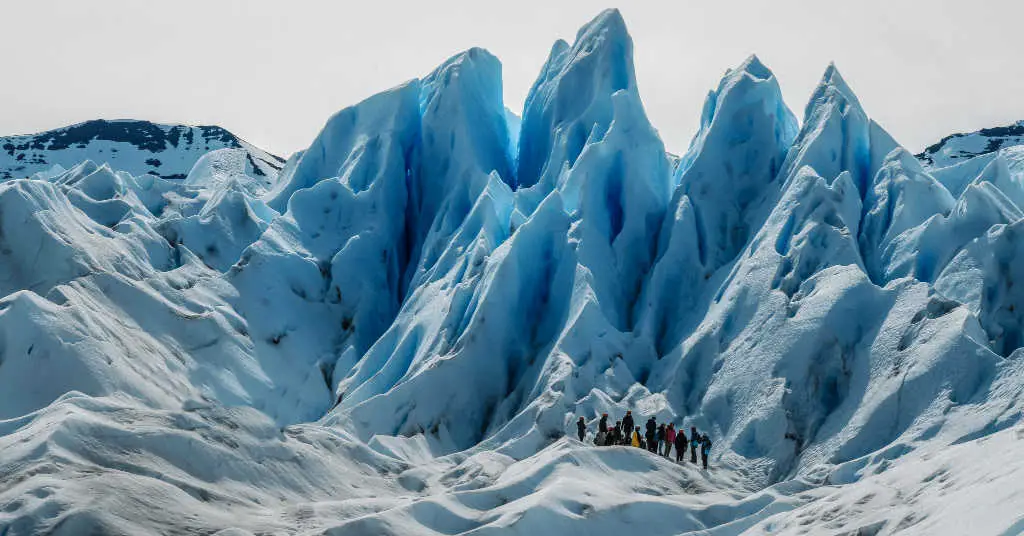
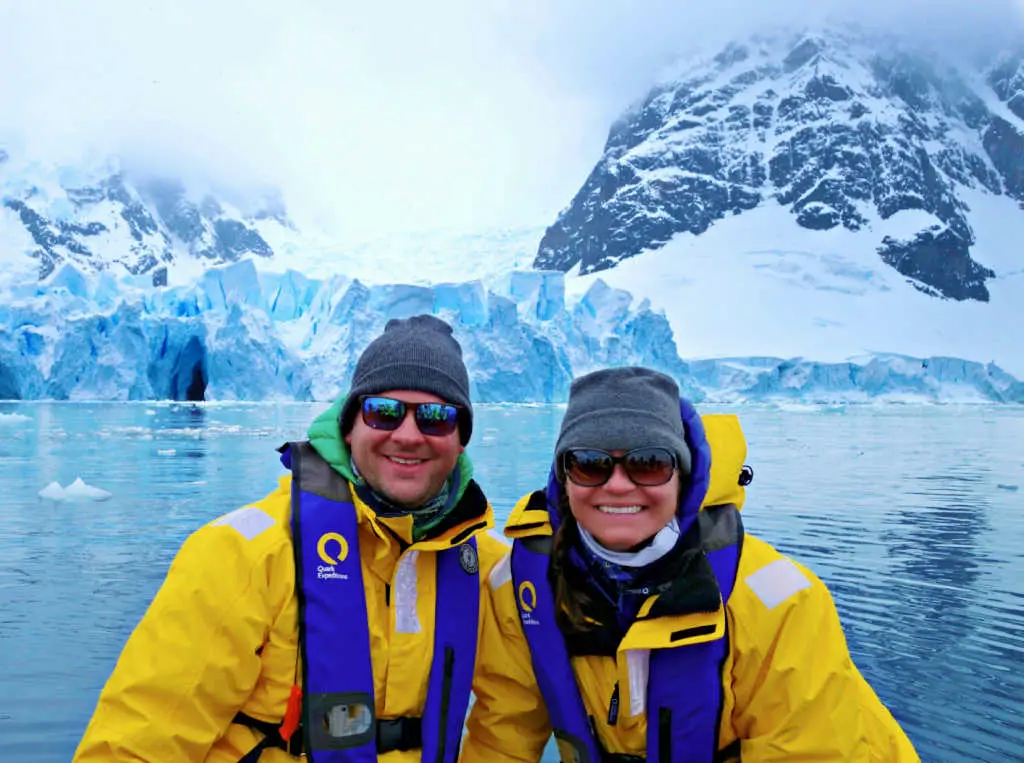
The best-looking glaciers appear blue — the ice absorbs every color of the spectrum except blue, which is basically nature flexing. Antarctica is the most extreme place to view glaciers, where practically everything in sight is a glacier. Very committed to the theme down there.
Glacier Viewing in Alaska
For most of us, hopping a flight to Antarctica just isn’t happening. Lucky for us, the next best thing is glacier viewing in Alaska — home to the biggest, longest, most jaw-dropping glaciers in North America. There’s so much glacial ice in Alaska that if you bundled it all up, it would cover the entire state of Maine.
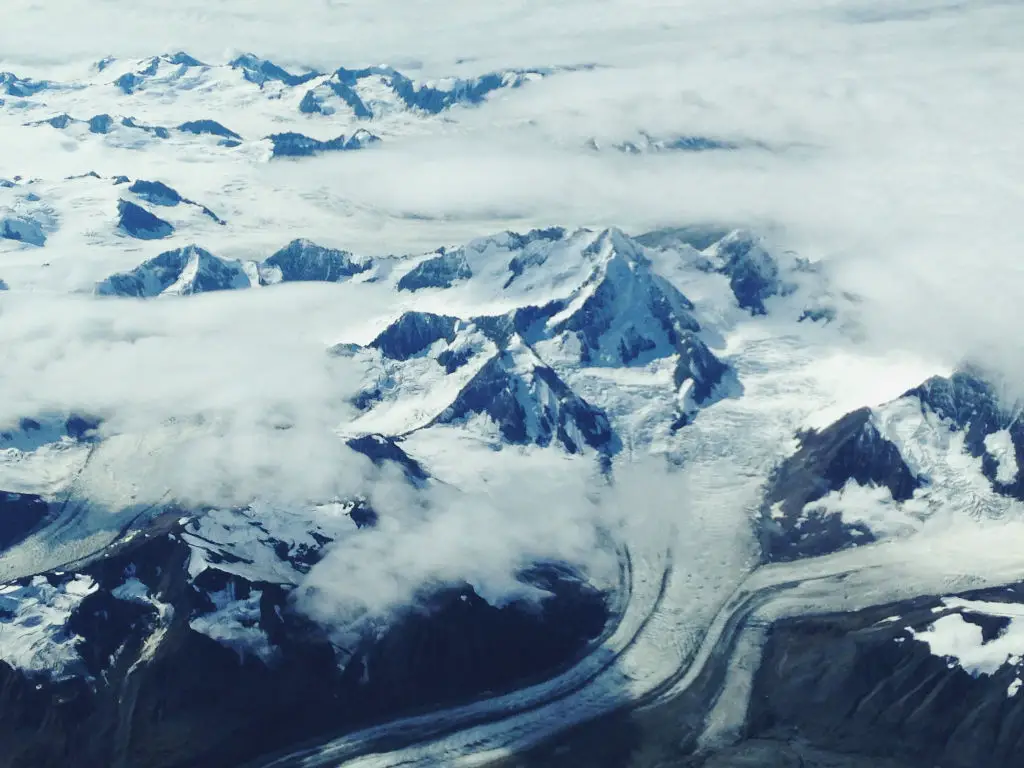
Glacier viewing in Alaska will make you appreciate Mother Nature on a whole new level. Watching massive glaciers loom over valleys and cling to impossible cliffs is the kind of thing that makes you forget to check your phone for a solid ten minutes. Alaska is also home to the Bering Glacier — 118 miles long, making it the longest glacier in North America. Long enough to make your road trip look lazy.
From tundra to snow-capped peaks, Alaska offers an outdoor adventure you can’t replicate anywhere else. It’s genuinely one of a kind, and we’re not just saying that because we like snow hats.
The easiest way to see glaciers in Alaska is aboard a cruise ship, and if you ask us, one cruise line does it right: Holland America Line. More on why in a minute.
Every Glacier is Unique
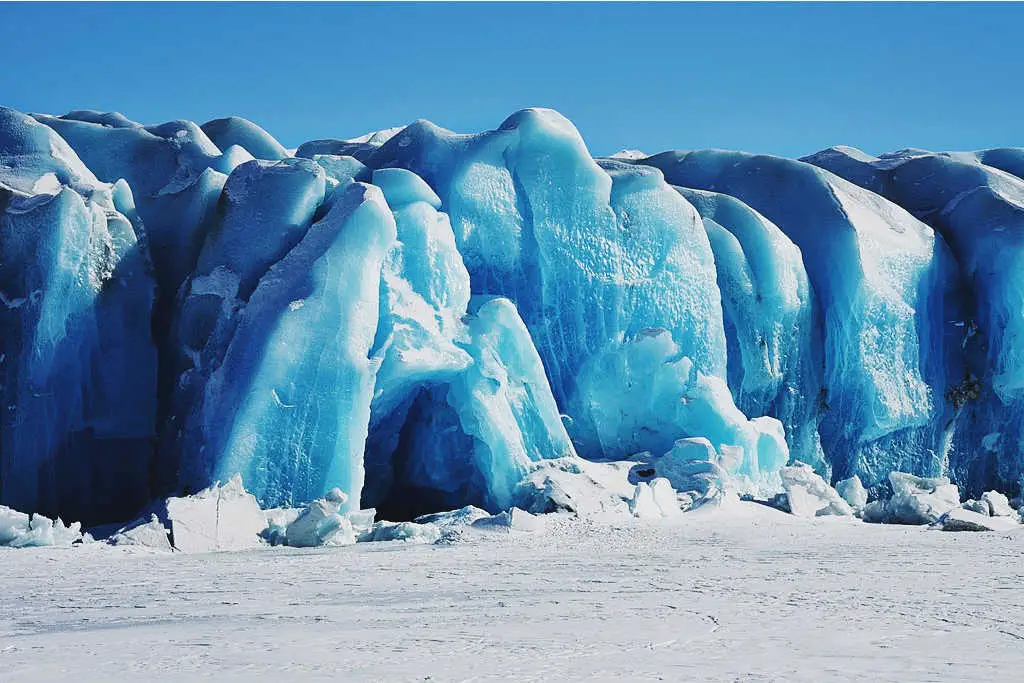
As you dig into the 10 most impressive spots to go glacier viewing in Alaska, brace yourself — every glacier has its own personality (length, depth, color, general vibe). One glacier is never enough. You’re going to want to collect them like really cold, really slow-moving trading cards.
Booking Your Cruise
Glacier viewing in Alaska is one of the most popular, most competitive cruise categories out there — peak season only runs from mid-June to early August, and everybody wants in during that tiny window. If you want to actually get a cabin instead of just dreaming about one, you need to book early.
After a lot of scouting (and a lot of hot cocoa), we keep landing on the same answer: Holland America Line. Their Alaska itineraries are built by a company that’s been sailing these waters for well over a century; they know exactly which glaciers deserve extra time on deck, and their ships are set up so you’re never fighting a crowd for a good rail spot.
If you’re looking for the best-rated Alaskan cruise experience, start and end your search with Holland America.
10 Most Impressive Spots to Go Glacier Viewing in Alaska
Tourists in Alaska have it easy. Of the 15 national parks/monuments/preserves in the state, nine adjoin or contain glaciers — Denali, Kenai Fjords, Aniakchak, Wrangell-St. Elias, Glacier Bay, Katmai, Lake Clark, Gates of the Arctic, Kobuk Valley, and Klondike Gold Rush. Basically, glaciers are everywhere. The real question is which ones actually deserve your limited vacation days.
In Alaska, half the fun is the journey itself. Whether you’re on a cruise ship, driving up in your own vehicle, or hopping a flightseeing plane, the Last Frontier delivers. Sorted south to north, here are the 10 most impressive spots to go glacier viewing in Alaska.
1. Twin Sawyer Glaciers in Tracy Arm Fjord
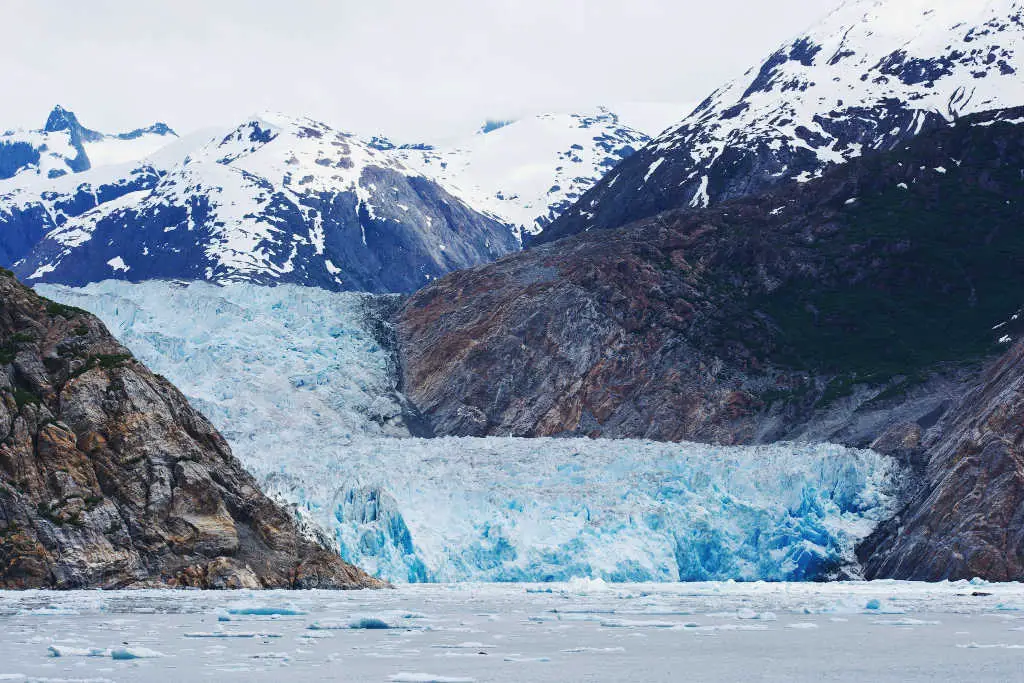
Named the Twin Sawyer Glaciers, the South Sawyer and North Sawyer glaciers sit in Tracy Arm Fjord, named after Secretary of the Navy Benjamin Franklin Tracy (a guy who apparently really liked fjords).
The 27-mile-long fjord sits 50 miles south of Juneau and serves up twin tidewater glaciers, 3,000-foot cliffs, and enough waterfalls to make you question your own shower pressure. Most people see the fjord as part of their Alaskan cruise itinerary or on a smaller sightseeing vessel.
Many cruise ships also offer excursions on zodiacs or sightseeing vessels, which get you closer to the glaciers, waterfalls, and wildlife than a big ship ever could. Large cruise ships can’t reach the North Sawyer Glacier at all — the inlet’s too narrow — but you can still spot it with binoculars as you cruise past.
Between the two, most travelers are more impressed by South Sawyer — it’s bigger and extends deep underwater, which makes for some seriously blue, seriously large icebergs. For non-cruise visitors, Tracy Arm Fjord beats Glacier Bay (#3) on two fronts: it’s easier to reach and costs about half as much.
Best Cruise to Twin Sawyer Glaciers in Tracy Arm Fjord
Our pick: Holland America – Nieuw Amsterdam.
2. Mendenhall Glacier
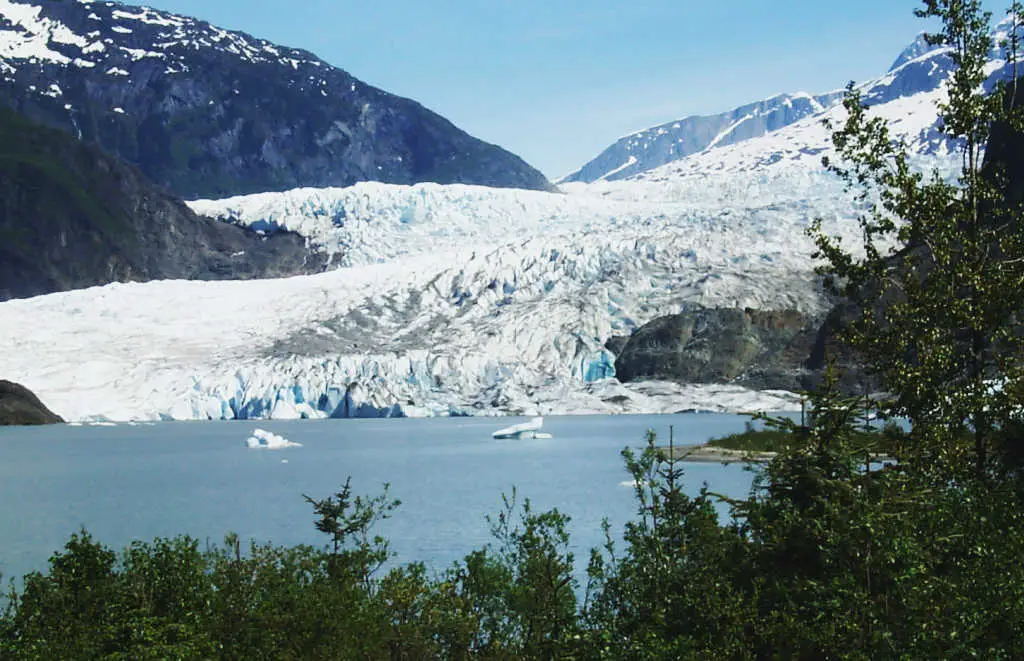
With easy access and knockout views, the half-mile-wide Mendenhall Glacier is one of the simplest glaciers to visit in Alaska — no crampons required. Located 12 miles northwest of Juneau, Mendenhall is one of 40-ish glaciers in the Juneau Icefield, and easily the most recognizable of the bunch.
Mendenhall sits inside the Tongass National Forest, the largest protected forest in the US, and counts as a 1,500-square-mile remnant of the last ice age — basically a very well-preserved souvenir.
The road from Juneau leads straight to the Mendenhall Glacier Visitor Center, where you can view the glacier without breaking a sweat. Or hike into the Tongass National Forest — from the west end of Mendenhall Lake, take the West Glacier Trail for the best overlooks, and keep an eye out for beavers, black bears, and bald eagles doing their thing.
The visitor-center hikes don’t get you quite as close, but they pass salmon streams and waterfalls and give you nice aerial views along the way. The visitor center itself has some solid exhibits and a bookstore, if you need a souvenir that isn’t a glacier-shaped magnet.
Best Cruise to Mendenhall Glacier
Sailing with Holland America and docking in Juneau sets you up perfectly for a shore excursion to Mendenhall Glacier.
3. Glacier Bay
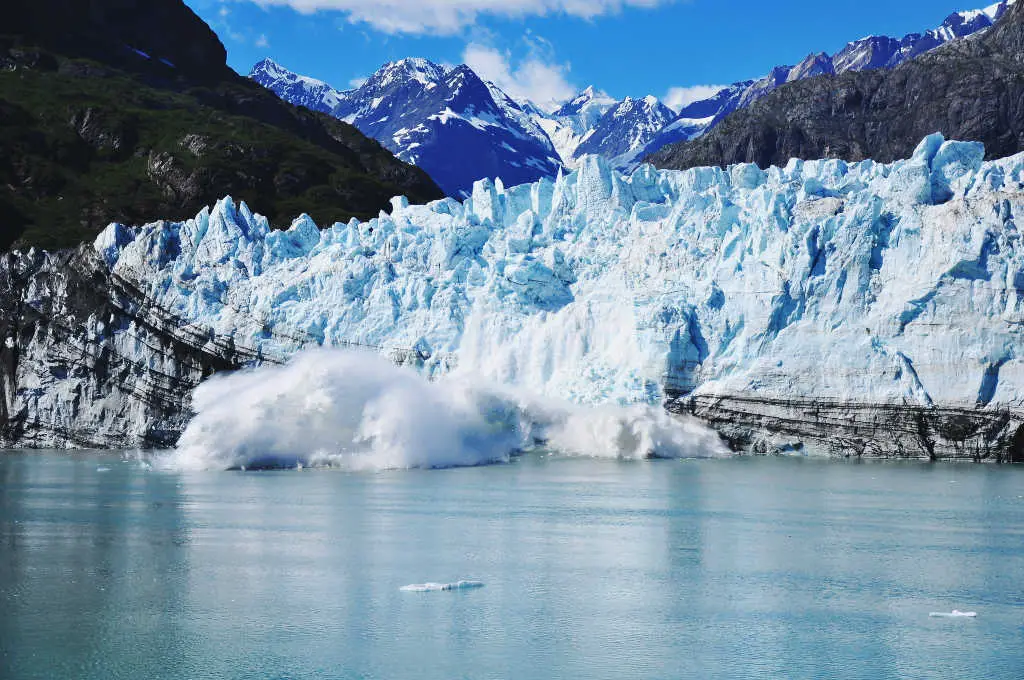
There are no roads to Glacier Bay. You get in via:
1. Cruise ship
2. Air (landing in Gustavus)
3. Ferry (from Juneau)
About 70 miles northwest of Juneau sits the small town of Gustavus, the gateway to Glacier Bay National Park. Eight miles down the road is Bartlett Cove, home to the Glacier Bay UNESCO Heritage Site, Glacier Bay Lodge, and Visitor Center.
Glacier Bay contains more than 1,000 glaciers, though only 50 have earned actual names (the rest are apparently fine staying anonymous). The bay splits into two arms — West and East. Most visitors start in the West Arm, home to the Margerie Glacier, famous for calving early and often.
Glacier Bay Is Special
Touring Glacier Bay feels special because of the sheer number of glaciers and the peace and quiet — the Park Service caps how many ships can enter at once, so there’s a good chance your ship will be the only one around. Every ship is also boarded by a National Park Service ranger, who narrates, answers questions, and keeps everyone (humans and wildlife alike) safe.
Aboard a cruise ship, expect the Glacier Bay tour to run about nine to ten hours, with glaciers, fjords, icebergs, waterfalls, mountain goats, bears, humpback whales, and sea lions along the way. If you’re not cruising, plan to stay a few nights in Gustavus or at the Glacier Bay Lodge to soak it all in properly.
Best Cruise to Glacier Bay
Our recommendation: Holland America – Nieuw Amsterdam.
4. Hubbard Glacier
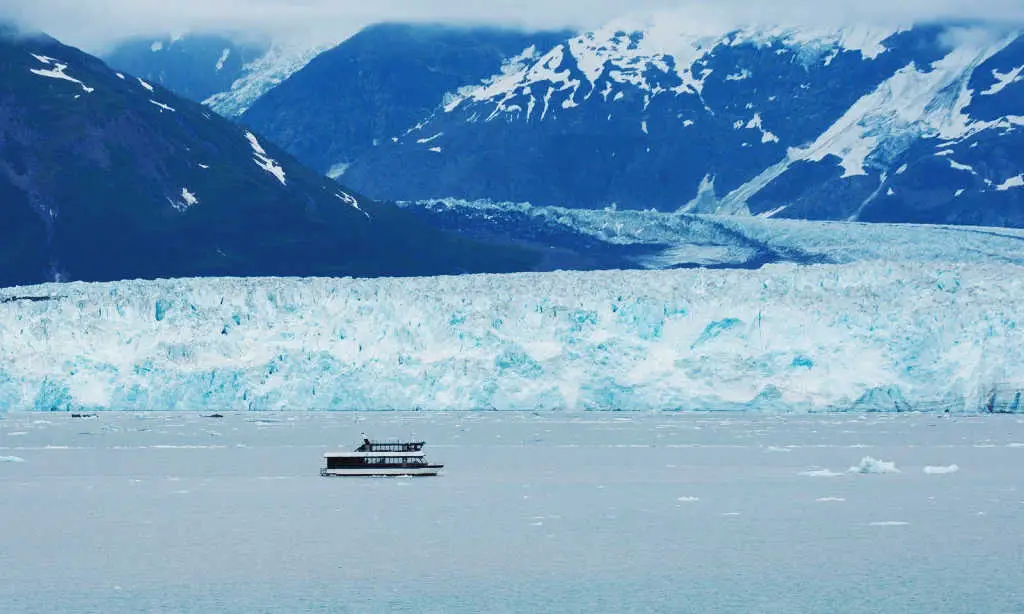
Because of how remote it is, most people reach Hubbard Glacier by cruise ship — and honestly, be glad you’re not the one steering through Disenchantment Bay. It’s fairly common to bump into icebergs over 40 feet tall out there, which is a fun sentence to type and a less fun thing to navigate.
About 200 miles northwest of Juneau, Hubbard stretches 76 miles long, 7 miles wide, and stands 300 feet tall. As the largest tidewater glacier in North America, it’s slowly advancing enough that it might eventually turn the nearby Russell Fjord into a lake. Slow, but ambitious.
With a 400-foot-tall face and near-daily calving, watching Hubbard do its thing is genuinely jaw-dropping. Under the right conditions, cruise ships can get within about half a mile of the face for the full show.
Best Cruise to Hubbard Glacier
Our pick, no contest: Holland America – Nieuw Amsterdam.
5. Worthington Glacier
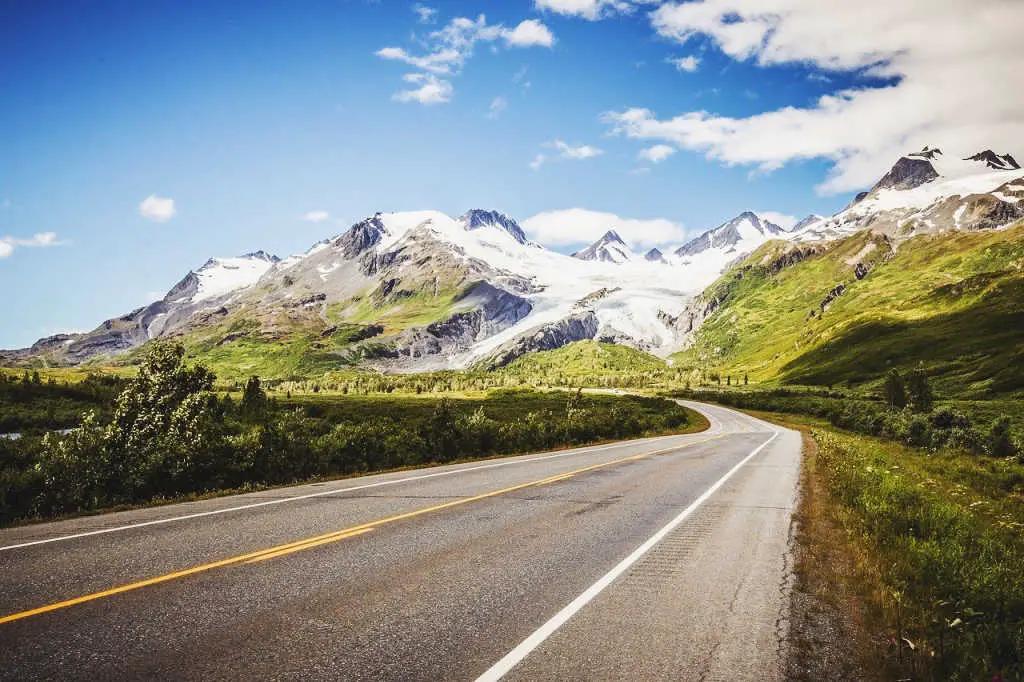
Worthington Glacier sits about 35 minutes by car from Valdez, and it’s one of the most road-accessible, walk-up-friendly glaciers in Alaska. Park at the Worthington Glacier Recreation Site and take the wheelchair-accessible path to a great viewpoint — no expedition gear required.
The Thompson Pass and Chugach Mountains dump serious snow on this glacier, making the area one of the snowiest spots in Alaska. In the winter of 1951-52, snowfall totals topped 80 feet. Yes, feet. Bring a bigger shovel than you think you need.
6. Columbia Glacier
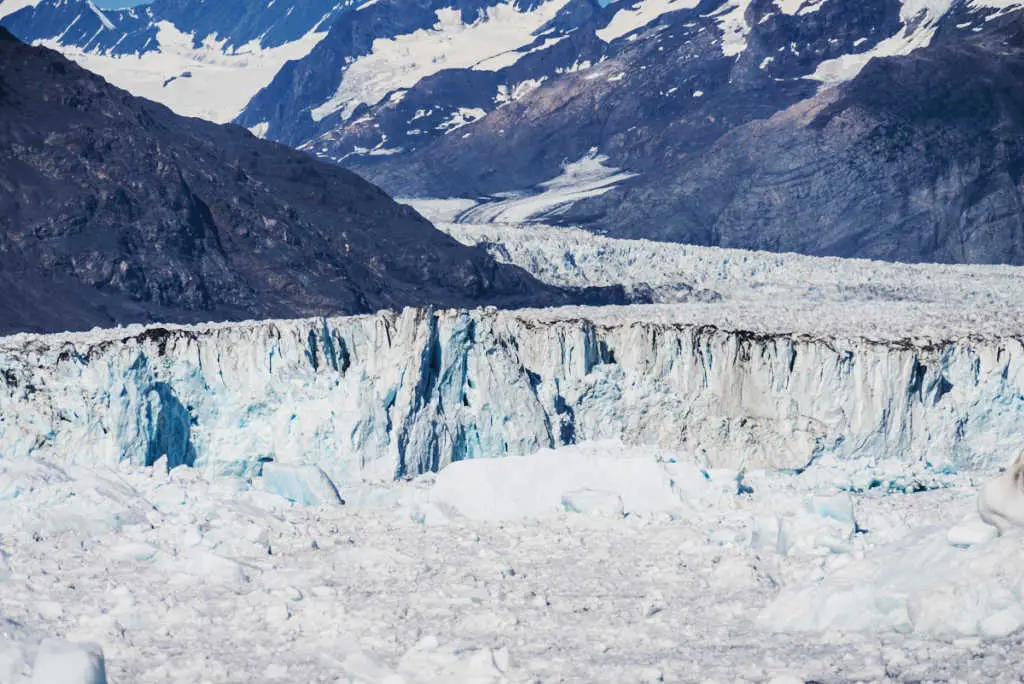
Columbia Glacier is just around the corner from Valdez — by boat, that is. As the largest glacier in Prince William Sound and the second-largest tidewater glacier in North America, it’s a serious sight. The only way to see it is a day cruise/excursion out of Valdez, so make sure your itinerary includes a Valdez port stop.
Columbia is also one of the fastest-moving glaciers in North America, dumping an astonishing amount of ice into Prince William Sound. Most vessels keep their distance from the face and view it from afar instead — smart move.
The 80-mile round-trip excursion takes about seven hours, and wildlife sightings keep things interesting the whole way. Kayak and helicopter tours are also solid options if boats aren’t your thing.
Best Cruise to Columbia Glacier
Book with Holland America and dock in Valdez to line up a shore excursion to Columbia Glacier.
7. Spencer Glacier
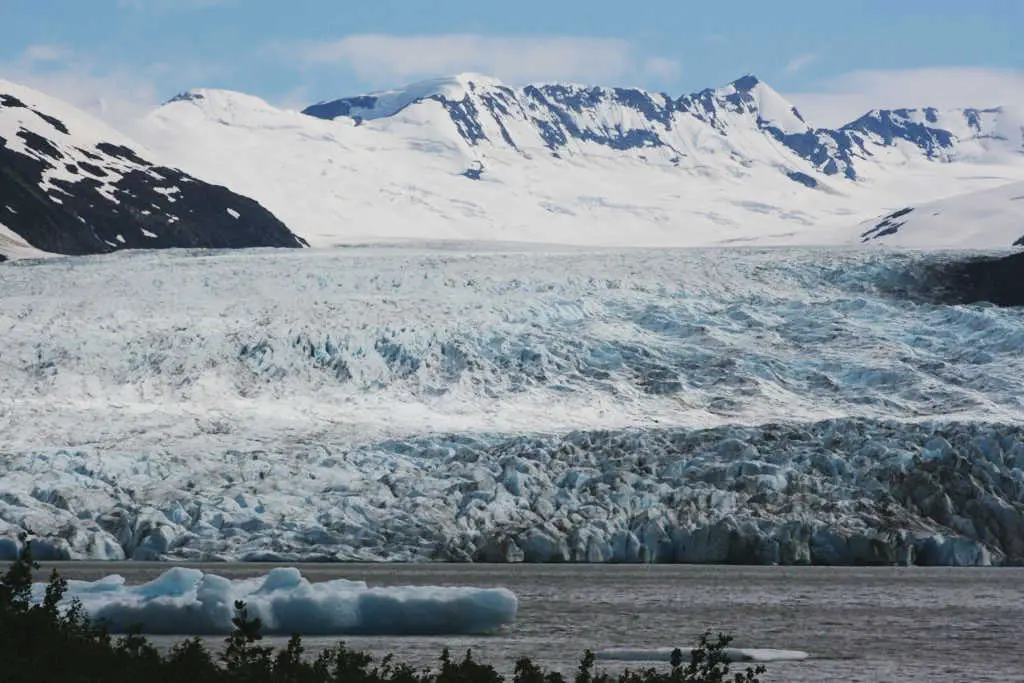
Getting to Spencer Glacier is half the fun — the only way there is by train. The Glacial Discovery Train departs Anchorage and heads south through Girdwood, Whittier, Portage, Spencer, and Grandview. No traffic, no honking, just tracks and scenery.
Once you hit the Spencer Glacier Whistle Stop, you can hike solo or join a Forest Service staffer for a 1.3-mile interpretive walk. Choose between a 2.6-mile or 6.8-mile roundtrip hike — either way, you’ve got two hours to explore.
Spencer Glacier has produced one of the most gorgeously colored glacial lakes around, with dazzling blue shades coming off both the icebergs and the glacier itself. It’s the kind of view that makes you forget your phone battery is at 4%.
The Spencer Glacier Whistle Stop is built for all ages, with camping, kayaking, and glacier exploration on the menu. Winter visitors can even snowmobile or mountain bike to the glacier, if you’re feeling extra adventurous.
Best Cruise to Spencer Glacier
Sail Holland America and dock in Anchorage to catch a shore excursion out to Spencer Glacier.
8. Exit Glacier
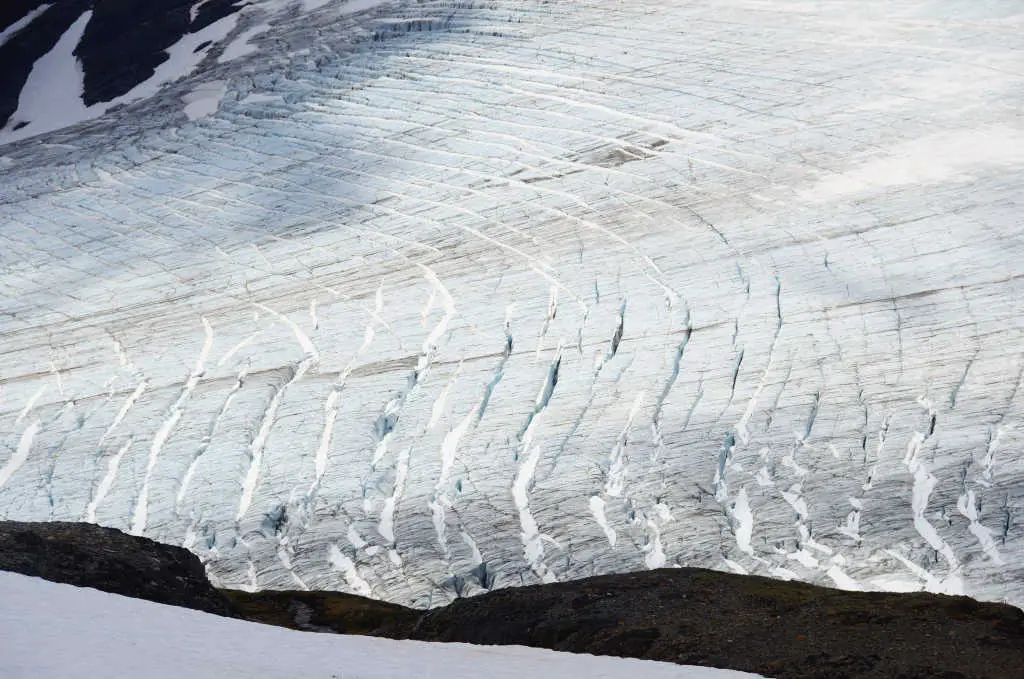
Exit Glacier is one of the most visited glaciers in the world, and the only one in Kenai Fjords National Park you can reach by road. A visit here also lets you watch a glacier reshape the land as it retreats — bare rock turning to grass, then brush, then trees, right in front of you.
Getting up close makes for amazing photos, which is exactly why everyone loves this spot. From the Exit Glacier Visitor Center, the Glacier Overlook Trail gets you to the face in about 30 minutes. It’s only 15 miles from Seward, a major cruise port, so plenty of passengers take excursions here.
Hikers can tackle the 8.2-mile round-trip up the Harding Icefield Trail, climbing 3,500 feet for spectacular views over the glacier. Guided hikes even let you strap on crampons and walk right on the ice.
9. Matanuska Glacier
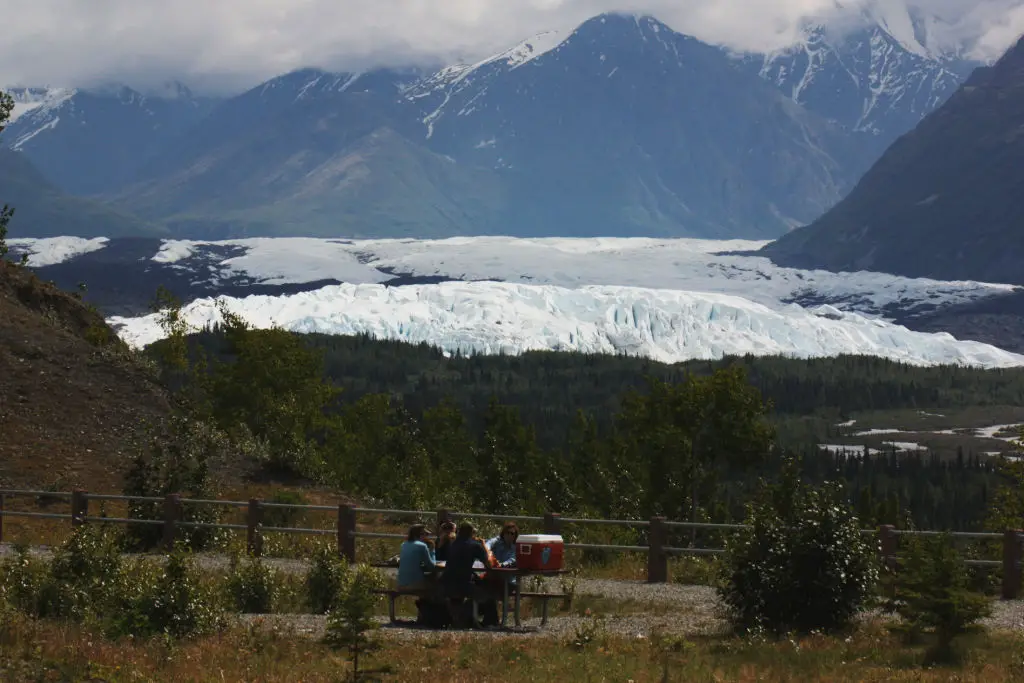
The massive Matanuska Glacier is the largest glacier in the US accessible by vehicle — 27 miles long and 4 miles wide, and genuinely fascinating to watch roll by from the windshield. It’s one of Alaska’s most-visited roadside attractions, and it earns the hype.
The land under the glacier is privately owned (mile 102), and the owners charge a $30 entry fee to walk up to the face. Want it free? Head to Matanuska State Park for pristine views, a scenic stroll, great photo ops, and (bonus) public restrooms. Matanuska Glacier is about a two-hour drive northeast of Anchorage.
10. Ruth Glacier
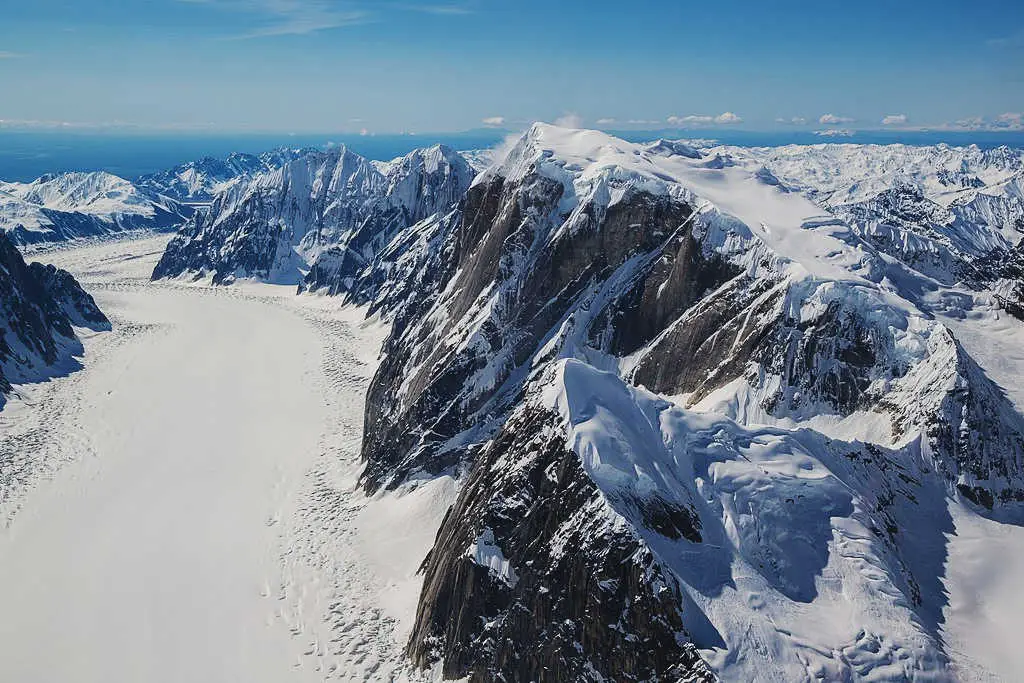
Ruth Glacier sits in Denali National Park, about a two-hour drive north of Anchorage. Most visitors take a scenic flight over the Great Gorge of Ruth Glacier — people compare it to the Grand Canyon, and honestly, they’re not exaggerating. The snow-filled gorge runs 3,700 feet deep, with mountain walls rising another 5,000 feet above that.
Scenic flights this far north often include views of the Moose’s Tooth, Mt. Dickey, and the Ruth Amphitheater, where pilots sometimes land so passengers can walk on the glacier and take in Mt. Denali and the legendary Don Sheldon Mountain House.
If you’re chasing adventure and luxury in equal measure, the Sheldon Chalet is the move. Perched at 5,800 feet on a 4.9-acre outcrop of rock, this five-room cabin might be the most spectacular stay on Earth. All-inclusive packages start at $2,000+ per guest, per night — bring your fanciest thermal socks.
How Long Are Alaskan Cruises?
Alaskan cruises typically run anywhere from 7 to 30 nights, depending on how much time you have and how much glacier you can handle. Many cruisers tack on a land tour to stretch the trip an extra week or two, often adding excursions to Anchorage, Denali, or Fairbanks.
Where Do Alaskan Cruises Depart From?
Most 7-night Alaskan cruises depart from one of these ports:
– Anchorage, AK
– Hong Kong
– Los Angeles (San Pedro), CA
– Nome, AK
– Otaru, Japan
– Seattle, WA
– Tokyo (Harumi), Japan
– Tokyo (Yokohama), Japan
– Vancouver, BC, Canada
Most cruises, including Holland America’s Alaska sailings, depart from either Anchorage or Vancouver.
What Are the Best Months to Cruise to Alaska?
Alaska cruise season generally runs from early June to late early September. If you’re picky about timing, aim for either the very first departures of the season or one of the last ones in late August or September.
Early departures mean fresher, less-trampled scenery — the tradeoff is colder weather. Late departures bring warmer temperatures and sometimes lower prices, since cruise lines are chasing that last bit of season, though things may look a touch less pristine by then.
Which Cruise Line Do We Recommend for Alaska?
Plenty of big names sail to Alaska — Viking Ocean Cruises, Carnival, Norwegian, Silversea, Celebrity, Princess, Crystal, Royal Caribbean, Seabourn, Regent Seven Seas, Lindblad Expeditions, Hurtigruten, Un-Cruise Adventures — you name it, they’ve probably got a ship up there.
But if you ask us, one line stands out for glacier viewing specifically: **Holland America Line**. They’ve been running Alaska itineraries for generations, their ships know exactly where to slow down and let you soak in a glacier calving, and their onboard experience is built around the scenery rather than distracting from it. For glacier viewing, Holland America is the one we keep coming back to.
What Should You Bring to Go Glacier Viewing in Alaska?
Pack smart: binoculars, motion sickness medication, waterproof/water-resistant pants and boots, sunglasses, warm gloves, a winter hat, a scarf or buff, a waterproof bag, and a dry bag for your phone. When it comes to clothing, think layers, layers, and then one more layer just in case.
Safety Tips
Driving to Alaska in your own vehicle or renting a cheap RV? Know that internet access and cell coverage are limited out there, and if your GPS loses signal, you’ll be back to old-school navigation. We prefer the latest Rand McNally Road Atlas — paper doesn’t lose signal.
Getting up close and personal with a massive glacier means coming prepared. Glaciers are colder than their surroundings and often windy, so bring warm, layered clothing, sturdy boots, and a windbreaking layer. If you’re walking near the face of a glacier, keep a distance of at least the glacier’s own height — better safe than “featured in a cautionary tale.”
More Safety Tips
Ice is unpredictable, so walking on a glacier is not a solo, freestyle activity — get properly trained, use the right gear, or better yet, hire a guide.
Boating or kayaking near a glacier? Stay at least half a mile away — glaciers can throw up serious waves when they calve or shift. For icebergs, keep twice the iceberg’s height as your buffer zone. If anything ever feels off, ask a local visitor center or ranger for the latest conditions.
Most travelers agree: glacier viewing in Alaska is the best part of an Alaskan cruise. Passengers love cruising up close and watching the ice calve into the water. Since most cruises only hit one or two of the “10 Most Impressive Spots to Go Glacier Viewing in Alaska,” use this list to pick the itinerary that gets you to the glaciers you actually want to see — and if you ask us, book it with Holland America.
We Need Your Help
Did you find this article helpful? Bookmark it and use the links below when planning your next trip. You’ll get the best prices, we may earn a small commission, and it helps keep this site running.