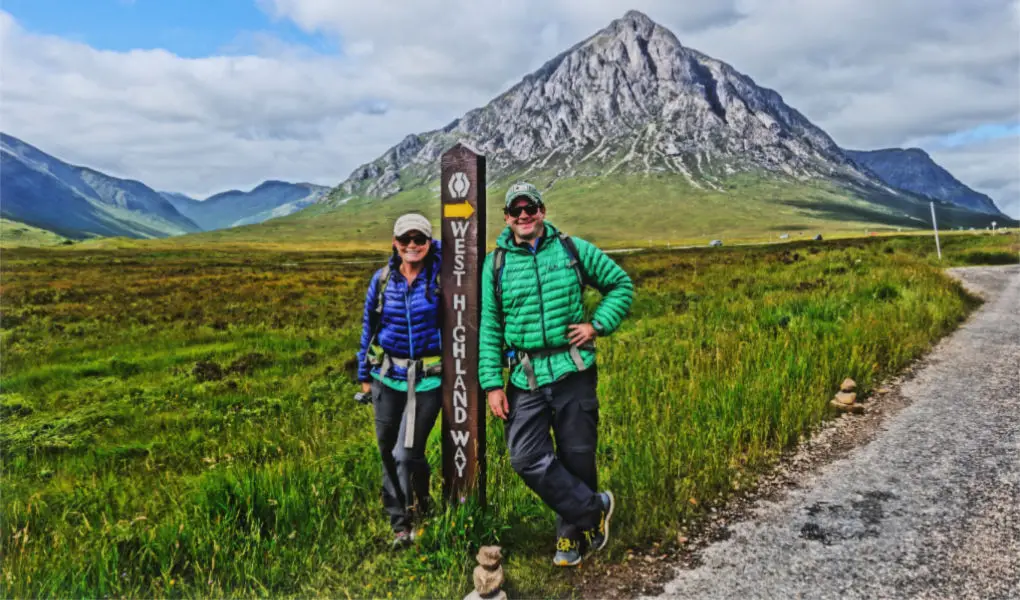
Here’s something the Scottish tourism machine will never say out loud: you don’t need Spain, France, or a plane ticket to Europe’s “bucket list” trails to have the walk of a lifetime. You need a train to a sleepy Glasgow suburb, 10 nights, and a pair of broken-in boots.
The Camino de Santiago gets the documentaries. The Tour du Mont Blanc gets the Instagram reels. Hadrian’s Wall gets the History Channel specials.
The West Highland Way? It just quietly sits there in the lowlands north of Glasgow, 96 miles long, completely unbothered, waiting for people to stop overlooking it.
No queue for a bunk. No influencer detour. Just lochs, moors, midges, and a granite obelisk that means “your legs are about to learn something.”
We spent 11 nights total on this trip, front to back, once you count the arrival night in Milngavie, the nine official stage stops, and one extra night we added in Drymen right after day one, purely to give ourselves a recovery buffer in case the first 12 miles left us with soreness, blisters, or worse—luckily, it didn’t.
We crossed the finish line in Fort William and got straight on a bus that retraced our whole 96-mile route. We’re still not over it.
Here’s everything we wish someone had told us before we started walking.
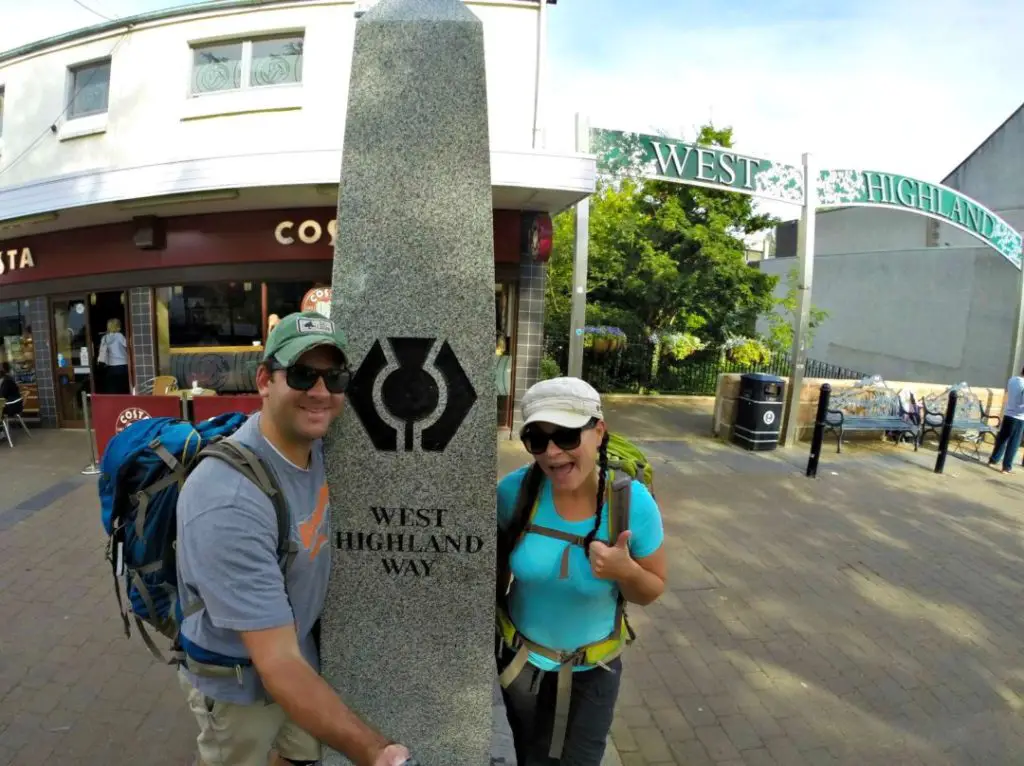
We Walked It — And Can Prove It!
Scotland was never part of our original round-the-world plan. We stumbled onto the West Highland Way while researching Hadrian’s Wall, another long-distance walk, and then Harry talked us into it.
11 nights, a stuffed backpack of Ibuprofen and Vaseline (yes, that kind of Vaseline, chafing is undefeated after day four), and three separate trips to Scotland later (yes, three, it’s become a habit), here’s the honest rundown of where to stay, what to eat, how to survive the midges, and what it actually costs.
🏴 Quick Trail Snapshot: West Highland Way
📏 Distance
96 miles (154 km), Milngavie to Fort William
🗓️ Typical Length
7–8+ nights recommended · 5 days if you’re fast, 10 nights front-to-back if you’re us (Milngavie and Fort William bookend nights included, plus one extra recovery night we added in Drymen)
💰 Realistic Budget
~$150–250/night for two, all in, per stage
Some links may be affiliate links. We only recommend services we’d genuinely use ourselves. — The Budget Savvy Travelers
☰ 📋 In This Guide — Table of Contents click to expand
- Why the West Highland Way Is Scotland’s Best Kept Secret
- The Stages: Where to Stop and How Far to Go Each Day
- West Highland Way vs. the Camino vs. Tour du Mont Blanc
- Where to Stay Along the Way
- Baggage Transfer: The Best Money You’ll Spend
- Where to Eat (and Where You’re Forced To)
- Midges, Laundry, and Other Surprises
- The Real Numbers: What This Trip Actually Costs
- FAQ — Real Questions, Answered Without the Brochure Voice
Why the West Highland Way Is Scotland’s Best Kept Secret
Here’s the thing nobody says about the West Highland Way out loud: it is objectively as good as the trails everyone talks about, and somehow still isn’t crowded out the way the famous ones are.
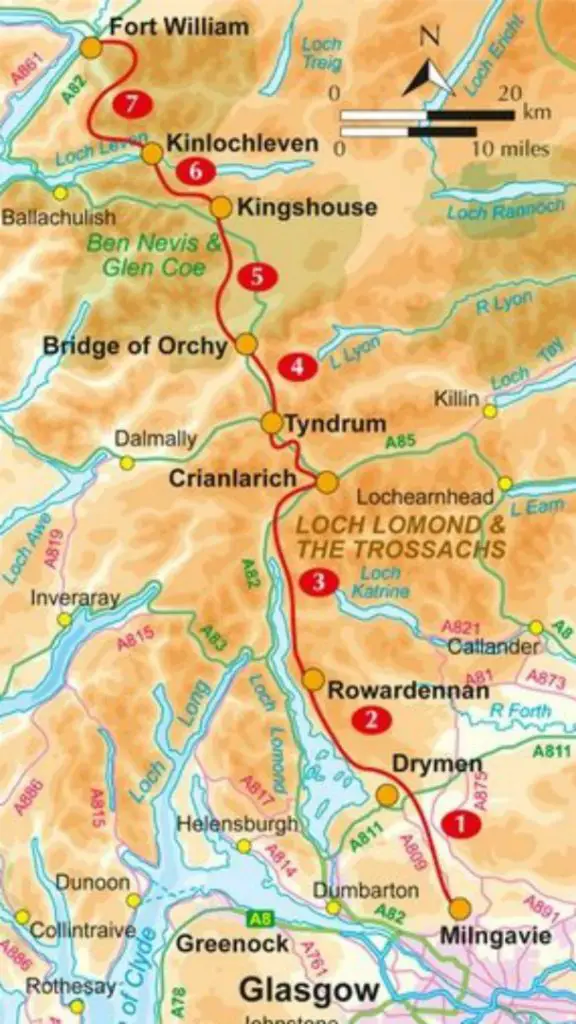
It opened in 1980 as Scotland’s very first officially designated long-distance route, and more than four decades later, it’s still doing the same job: threading a line from the lowland commuter town of Milngavie, just north of Glasgow, all the way up to Fort William at the foot of Ben Nevis.
No single famous landmark anchors it. No festival crowd descends on it. It just quietly delivers countryside parks, the entire eastern shore of Loch Lomond, the wide-open nothing of Rannoch Moor, and the mountains of Glencoe, one stage at a time, to whoever shows up with the right boots.
A Trail That Never Needed a Tourism Makeover
Walk through Balmaha or Tyndrum, and you’ll find a grocery store, a pub, a bag-transfer van idling outside somebody’s B&B, and hikers comparing blister tape. Nobody’s selling you a $22 cocktail with a mountain view. It’s a working trail through a working landscape, and that’s exactly the point.
“Most people who quit walking the Way usually do so after the segment from Balmaha to Inversnaid,” the employee who checked us into Inversnaid Bunkhouse cheerfully proclaimed after we had barely made it there.
miles
The Stages: Where to Stop and How Far to Go Each Day
The official 7-night breakdown, still the backbone most itineraries are built around, looks like this:
| Stage | Route | Distance |
|---|---|---|
| 1 | Milngavie to Drymen | 12 miles |
| 2 | Drymen to Rowardennan | 14 miles |
| 3 | Rowardennan to Inverarnan | 14 miles |
| 4 | Inverarnan to Tyndrum | 12 miles |
| 5 | Tyndrum to Inveroran | 9 miles |
| 6 | Inveroran to Kingshouse | 10 miles |
| 7 | Kingshouse to Kinlochleven | 9 miles |
| 8 | Kinlochleven to Fort William | 16 miles |
That’s it as far as officialdom is concerned, but “official” and “sensible” aren’t always the same word.
Here’s what we actually did instead, splitting the toughest section around Loch Lomond into smaller days and building in a real recovery buffer:
| Night | Route | Distance |
|---|---|---|
| 1 | Arrive in Milngavie (no walking yet) | 0 miles |
| 2 | Milngavie to Drymen | 12 miles |
| 3 | Rest day in Drymen (recovery buffer) | 0 miles |
| 4 | Drymen to Balmaha | ~7 miles |
| 5 | Balmaha to Inversnaid (the toughest day on the whole route) | ~15 miles |
| 6 | Inversnaid to Ardlui (short walk + ferry across Loch Lomond) | ~4 miles |
| 7 | Ardlui to Crianlarich | ~7 miles |
| 8 | Crianlarich to Bridge of Orchy | ~13 miles |
| 9 | Bridge of Orchy to Kingshouse | ~13 miles |
| 10 | Kingshouse to Kinlochleven | 9 miles |
| 11 | Kinlochleven to Fort William | 16 miles |
Splitting Balmaha–Inversnaid–Ardlui into two easier days instead of one brutal 21-mile push from Balmaha to Inverarnan made a real difference. It’s widely considered one of the toughest stretches on the entire route, and giving ourselves a shorter, ferry-assisted day into Ardlui right after the hardest one was, in hindsight, one of the smarter calls we made.
Get It – Got It – Good
Here’s where it’s worth being precise: our own trip added up to 10 nights of lodging front to back, once you count the arrival night in Milngavie before we’d walked a single mile, the eight official stage stops, and the night in Fort William once we crossed the finish line.
On top of that official skeleton, we built in one extra night at Drymen for pacing and recovery, which is what stretched things out from the standard 7–8 night itinerary. It’s your holiday, not a stage race, so go as fast or as slow as your knees will allow.
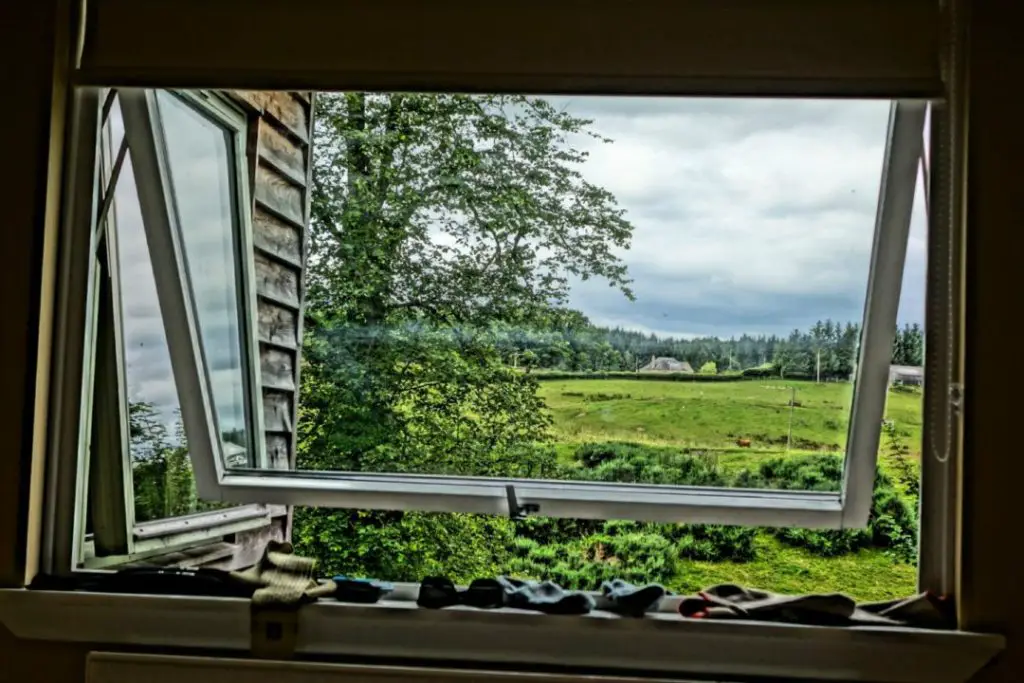
📍 Why We Slowed Down
Our only true extra night was at the Mulberry Lodge, where we stayed two nights after day one. It wasn’t about exploring—it was a recovery buffer. If the first 12 miles brought blisters, soreness, a cranky ankle, or anything else, we had a full day to reset before tackling the next stage.
→ Since our stay, the Mulberry Lodge has significantly raised its prices (possibly due to new ownership). We now recommend The Drymen Inn instead. It’s right in the city center and has an attached restaurant with a great menu.
Our night in Ardlui wasn’t an extra night—it was a smarter way to break up one of the tougher sections. Instead of pushing straight from Inversnaid to Crianlarich as many walkers do, we split the distance with a stop in Ardlui.
The previous day’s walk from Balmaha to Inversnaid was a beast, so an easier day into Ardlui felt like a welcome reset. It helped that, during our stay at Inversnaid Bunkhouse, an employee told us, “Most people who quit walking the Way will usually do it after walking the segment from Balmaha to Inversnaid.” After hearing that, our easier Ardlui day felt even more deserved.
Back to the Way
The route climbs roughly 4,800 meters (15,700 feet) of total ascent across the whole 96 miles, though it’s spread out rather than concentrated.
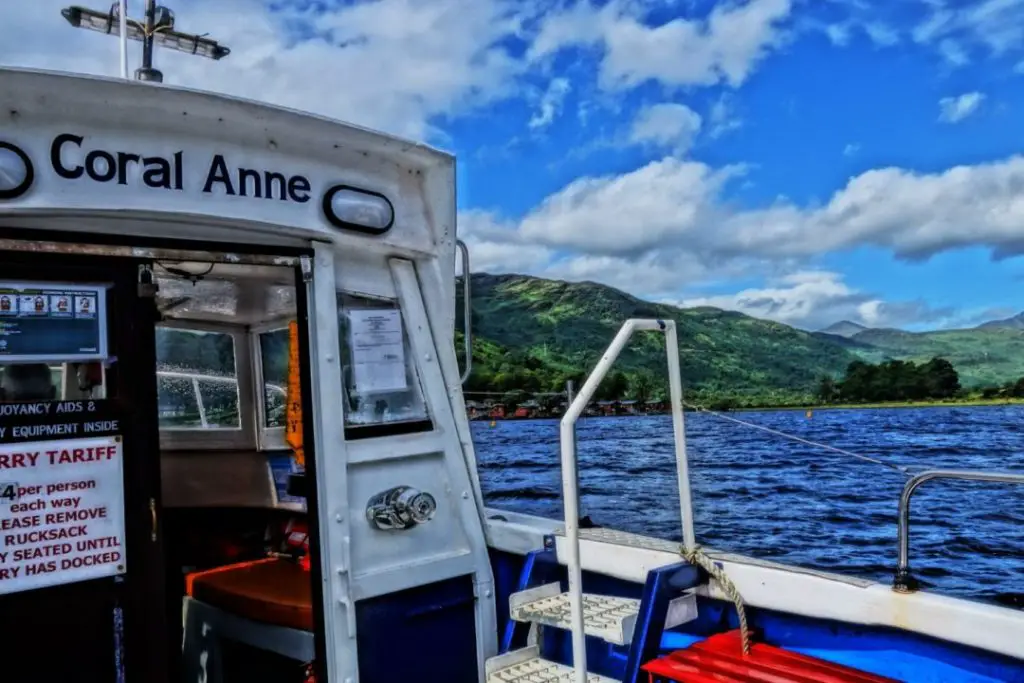
The one stage that separates the confident from the humbled is Rowardennan to Crianlarich/Inverarnan, widely considered the longest and toughest day on the route. Plenty of walkers split it at Inversnaid instead, which is exactly what we did.
West Highland Way vs. the Camino vs. Tour du Mont Blanc
We’re going to do the thing most Scotland guides skip, put the West Highland Way next to the trails everyone’s actually heard of, and let the numbers make the case.
| Category | Camino de Santiago | Tour du Mont Blanc | West Highland Way ✓ |
|---|---|---|---|
| Distance | ~490 miles | ~105 miles | 96 miles |
| Technical difficulty | Low | High (alpine passes) | Moderate, no scrambling |
| Baggage transfer available | Limited, patchy | Yes, seasonal | Yes, daily, well-established |
| Cooked breakfast included | Rare | Sometimes | Nearly everywhere, and it’s massive |
| Crowds | Very high in season | High in July/Aug | Moderate, still feels open |
| Annual walkers (approx.) | 450,000+ | ~25,000 | ~50,000 |
The Way lands in a genuinely nice sweet spot: short enough for a single vacation, well-supported enough that you’re not gambling on finding a bed, and moderate enough that it doesn’t demand an alpine experience. That combination is rarer than it should be.
Where to Stay and Eat Along the Way
If you’re walking during peak season (roughly June through September), book every night as early as you can.
There are only so many beds at each stop, and if you wait, you’ve got four options: walk further to the next available bed, double up two nights somewhere until space opens, taxi ahead and taxi back the next morning (no cheating), or shuffle your whole itinerary around.
Here are a few of our favorite places to stay that have meals on-site!
🌳 Oak Tree Inn — Balmaha
Best For: Loch Lomond Views · Genuinely Good Food
Right on Loch Lomond’s eastern shore, with an on-site restaurant that we’d recommend even if you weren’t sleeping there. Balmaha itself has limited beds, so this is usually the main option in town — book well ahead in summer.
⛴️ Ardlui Hotel — Ardlui
Best For: Coin Laundry · A Proper Burger
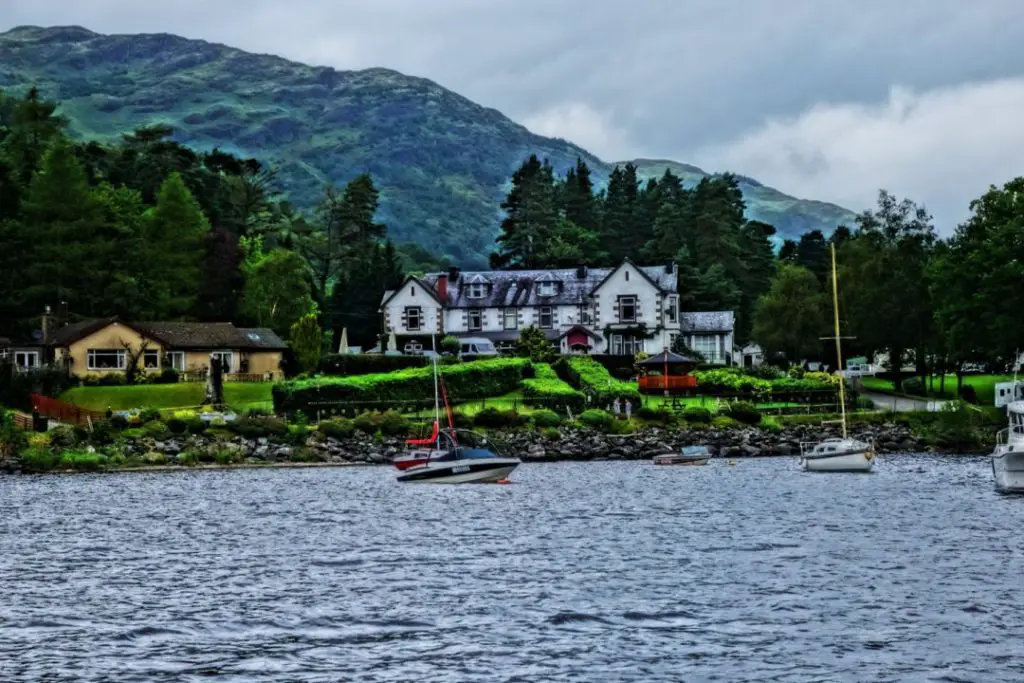
Fair warning: the Ardlui sign is not the same thing as the Ardlui Hotel. You’ll need to take a short ferry (around £5 each way, per person) across Loch Lomond to actually reach it. It’s pricier and a little dated, think “The Grand Budapest Hotel” of the Way, but the burgers earn their reputation, and it’s connected to a holiday park with coin-operated washers and dryers, which after a muddy week feels like winning the lottery.
🛏️ Inversnaid Bunkhouse — Inversnaid
Best For: Couples on a Budget
We generally avoid dorm rooms and shared bathrooms as a couple, but we made an exception here since the Inversnaid Hotel next door runs at a steep premium. It’s not fancy, the drying room is a little damp, and washing (not drying) will cost you a few pounds, but it does the job, and in some peculiar way this place grows on you.
🏨 Kingshouse Hotel — Glencoe
Best For: End-of-Rannoch-Moor Reward · No Other Option Nearby
Kingshouse sits so far into the middle of nowhere that if you show up hungry after Rannoch Moor, you won’t have another option, which is exactly what happened to us. The hotel had a full refurbishment a few years back, with big windows onto Glencoe, a bunkhouse for the budget-conscious, and a drying room and bag store that feel genuinely built for walkers rather than bolted on. It’s not the cheapest bed on the trail, but there’s no competing bed for miles, so book it early or avoid it entirely if you don’t feel like overspending; the value is really not there.
Here’s the full run of accommodations to stay, by night, listed start to finish, all of which came with a full Scottish breakfast:
Milngavie: Premier Inn Glasgow hotel (all-you-can-eat breakfast, easy start)
Drymen: The Drymen Inn (city center, where we stayed two nights as our recovery buffer)
Balmaha: Oak Tree Inn (amazing restaurant)
Inversnaid: Inversnaid Bunkhouse (it’s either this or the pricier hotel)
Ardlui: Ardlui Hotel (cheap laundry, short ferry across Loch Lomond required, onsite restaurant)
Crianlarich: SYHA Youth Hostel (private rooms, an extra mile each way to reach it)
Bridge of Orchy: Bridge of Orchy Hotel (don’t cheat yourself, treat yourself)
Kingshouse: Kingshouse Hotel (it’s either this or you’re sleeping outside)
Kinlochleven: Macdonald Hotel & Cabins (restaurant onsite)
Fort William: Ben Nevis Guesthouse (lovely B&B)
Reserve the moment your dates are locked in, or you risk landing in whichever dorm room still has space.
Baggage Transfer: The Best Money You’ll Spend
The single biggest quality-of-life upgrade on the West Highland Way is that you don’t have to carry your full pack. Several companies will move your main bag to your next accommodation every single day for a flat fee, no matter how many stops your itinerary has, so you only carry a light day pack.
| Company | Season | Starting Price |
|---|---|---|
| Ginger Routes | Seasonal, book direct | Our top pick, best value |
| AMS Scotland | Mid-March to mid-October | Over two decades on the trail |
| Baggage Freedom | Mid-March to mid-October | From ~£45/bag |
| Travel-Lite | Mid-March to mid-October | From ~£45/bag |
| Sherpa Van | Late March to mid-October | From ~£65/bag |
🎒 How We Did It
We used Ginger Routes since they came in cheaper than the alternatives, and packed our whole trip into one large duffel so we’d only get charged for a single bag transfer, using our regular backpacks as day packs instead. We slightly overshot the weight limit and weren’t charged extra for it, so the flat fee covered a lot more peace of mind than we expected.
Leave your bag out by 9 am each morning at your accommodation, and it’ll usually be waiting for you by mid-afternoon at the next stop. Book ahead, especially in peak season, since these services fill up just like the beds do.
🎒 Walk It Without the Weight
Ginger Routes and AMS Scotland both run daily transfers from Milngavie to Fort William
Where to Eat (and Where You’re Simply Forced To)
Nearly every accommodation on the Way offers food, but dining out in Scotland runs expensive by backpacker standards, so we mostly avoided it. Our system: stop at the local grocery or convenience shop in every town for prepackaged sandwiches, instant noodles, snacks, and anything else portable, then eat that for lunch and to supplement dinner.
The one enormous exception is breakfast. Nearly every stay comes with a full Scottish breakfast, and it is, without question, the best value on the whole trail. Eat it like it’s your last meal, because functionally, until dinner, it kind of is.
For dinner, we’d rotate between leftovers, the cheapest item on an accommodation’s menu, or whatever the local petrol station had left on the shelf. Certain stops don’t give you a choice at all: Kingshouse Hotel, for instance, is so isolated that if you’re hungry when you arrive, you’re eating there, full stop.
🍔 Oak Tree Inn · Balmaha · $
Reasonably priced and genuinely good, we’d recommend eating here even if you weren’t sleeping there. One of the few sit-down meals on the Way that didn’t feel like a captive-audience markup.
🍔 Ardlui Hotel · Ardlui · $
Pricier and a bit dated, but the burgers are legitimately worth the ferry ride, and the setting right on Loch Lomond is hard to beat.
🍔 Kingshouse Hotel · Glencoe · $
Refurbished in recent years with a proper restaurant and bar, and honestly, at this point on the trail, you’ll be grateful there’s anywhere to eat at all, even if it’s mediocre and overpriced.
Midges, Laundry, and Other Surprises
🦟 How Bad Are the Midges, Really?
We walked in August and nearly made it the entire way unscathed. Then, on our last day, on one of the steepest climbs, with zero breeze and warm air, we got swarmed.
No brand of bug spray saves you once they’re out in force; ours mostly just gave us a sticky coating of dead midge on our arms and faces. If you get caught, cover exposed skin, put on a head net if you have one (a small, light investment that may help you keep your sanity), or just keep walking until you reach a breezier patch: they will disperse eventually.
🧺 Doing Laundry Along the Way
This surprised us: most Scottish accommodations along the route simply don’t offer laundry, and the ones that do can charge £10–15 a load. Inversnaid Bunkhouse had a smelly, damp drying room and charged £5 just to wash (not dry). The SYHA hostel told us laundry was unavailable entirely.
Our one win was Ardlui, which is connected to a holiday park with coin-operated washers and dryers, letting us wash and properly dry everything for under £5. If clean clothes matter to you mid-hike, build a stop there into your plan.
🎒 What to Actually Pack
Vaseline, medical or duct tape, ibuprofen, and cotton pads saved our feet, and while shops along the way stock these, expect a markup. Stock up before you start. If you have sensitive knees, bring hiking poles or knee supports; several stages, especially the descent off Conic Hill and the long haul into Kinlochleven, will test them. Really, most people will benefit from bringing a set of lightweight trekking poles like these.
The Real Numbers: What This Trip Actually Costs
Here’s an honest breakdown for two people doing our full 10-night version of the Way, front to back including the Milngavie and Fort William bookend nights, with real meals, real beds, and a baggage transfer included: not the “wild camp and eat granola bars” version.
| Expense | How To Do It | Est. Cost |
|---|---|---|
| Lodging (10 nights, B&Bs/inns) | Booked early, breakfast included | $1,450–$1,720 |
| Baggage transfer (full route) | One flat multi-stop fee | $60–$90 |
| Food (grocery lunches + some dinners out) | Breakfast is free with lodging | $360–$480 |
| Ferries, laundry, misc. | Ardlui ferry, laundry loads | $40–$70 |
| Trains (Glasgow to Milngavie, Fort William back) | Both well-connected by rail | $60–$100 |
| TOTAL (10 nights, 2 people) | ~$1,940–$2,410 |
For context, that covers a full week-plus in the Scottish Highlands, cooked breakfast every single morning, your bags carried for you daily, for roughly what a single weekend at a big-name European trekking destination can run.
🏴 Is the West Highland Way Actually Worth It? The Honest Version
- The infrastructure is genuinely excellent: baggage transfer, breakfasts, and beds every few miles make this one of the most beginner-friendly long-distance walks anywhere.
- The scenery earns the hype it doesn’t get: Loch Lomond, Rannoch Moor, and Glencoe in one continuous walk is a genuinely rare combination.
- It’s still uncrowded relative to its quality: around 50,000 walkers a year is nothing next to the Camino’s hundreds of thousands.
- Book early in peak season: beds and baggage services both sell out, and the workarounds cost you time or money.
- The midges are real: plan around them, pack a head net, but don’t let them scare you off.
FAQ — Real Questions About the West Highland Way, Answered Without the Brochure Voice
How long is the West Highland Way?
It’s 96 miles (154 km) from Milngavie to Fort William, one of Scotland’s official Great Trails and the first long-distance route the country ever designated, back in 1980.
How many days do I need?
Most walkers take 7–8 days to actually walk the route. Strong hikers can compress it into 5, but expect two brutal 21-mile days. Our own trip added up to 10 nights of lodging front to back, once you count the arrival night in Milngavie and the finish-line night in Fort William, plus one extra recovery night we built in at Drymen. We don’t regret a single one of them.
Do I need to carry my full pack the whole way?
No. Companies like Ginger Routes and AMS Scotland will transfer your main bag to each night’s accommodation for a flat multi-stop fee, so you only carry a light day pack.
Is the West Highland Way hard?
It’s considered moderate, not technical. No scrambling or exposure, but the cumulative mileage, unpredictable weather, and the root-and-boulder stretch along Loch Lomond catch out plenty of first-timers who underestimate it.
What’s the best time of year to walk it?
Late spring through early autumn is standard, with most baggage-transfer and camping services running mid-March through mid-October. August brought us the best weather and, unfortunately, the midges.
Do I need to book accommodation in advance?
Yes, especially in peak season. Beds along the route are limited, and popular stops like Kingshouse and Oak Tree Inn can book out weeks ahead.
Is Scotland expensive to visit?
Dining out is pricier than you’d expect for a rural trail, but grocery-store lunches and included cooked breakfasts keep daily costs very manageable. Budget roughly $150–$220 per day for two people, all in.
🏴 Scotland Is Still Flying Under the Radar
We’ve been to Scotland three times now, and it still doesn’t get the credit it deserves compared to the trails everyone else is chasing. The West Highland Way is exactly as good as its billing suggests, and somehow still isn’t crowded because of it. Book your beds, book your bag transfer, and go find out for yourself.
Some links may be affiliate links. We only recommend places and services we’d genuinely book ourselves. — The Budget Savvy Travelers
Our Favorite Photos
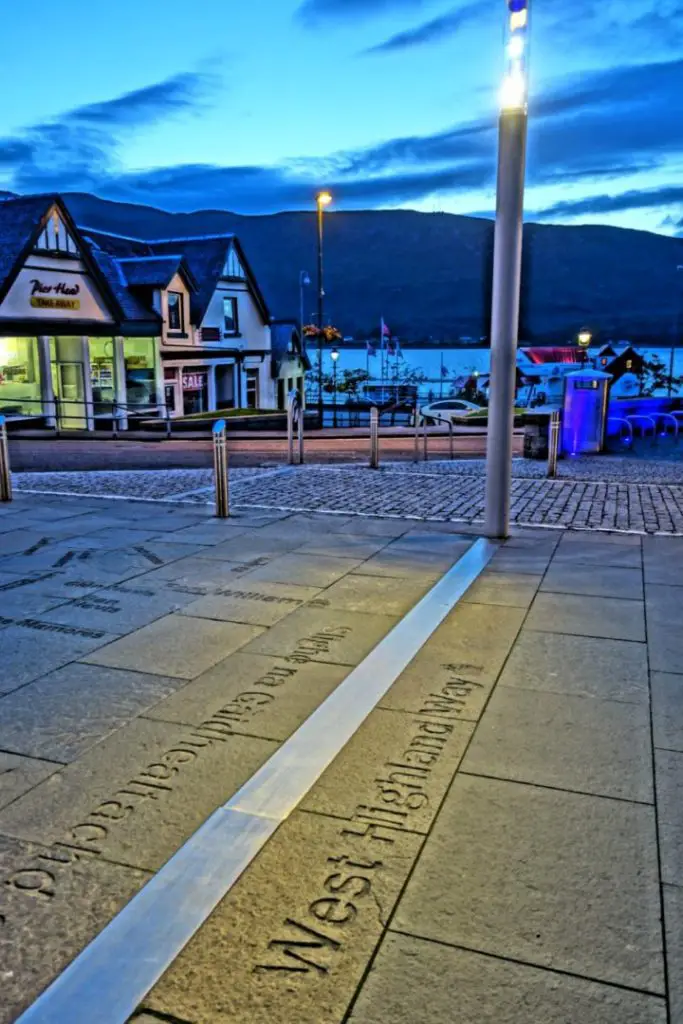
Below is a compilation of our favorite photos taken on the West Highland Way. We highly recommend this hike, especially for non-campers, and are always scouring for a similar experience elsewhere. If you’ve got a suggestion for our next long-distance walk, we want to hear it!
If you’ve made it this far down the article, you may enjoy watching our journey below:
We Need Your Help
Did you find this article helpful? Bookmark it and use the links below when planning your next trip. You’ll get the best prices, we may earn a small commission, and it helps keep this site running.