Most “best value safari” articles are either luxury lists in disguise or vague round-ups that skip the price talk entirely. This one is neither. We paid real money, saw real wildlife, and came back with real opinions, including one about blood dripping onto our vehicle from a leopard’s kill in a tree above us, but we’ll get to that. Here’s exactly where to find the best value safari lodges in Africa for 2026, ranked, priced, and picked for what they actually deliver.
✈️ Our Africa Experience — Why You Can Trust This Guide
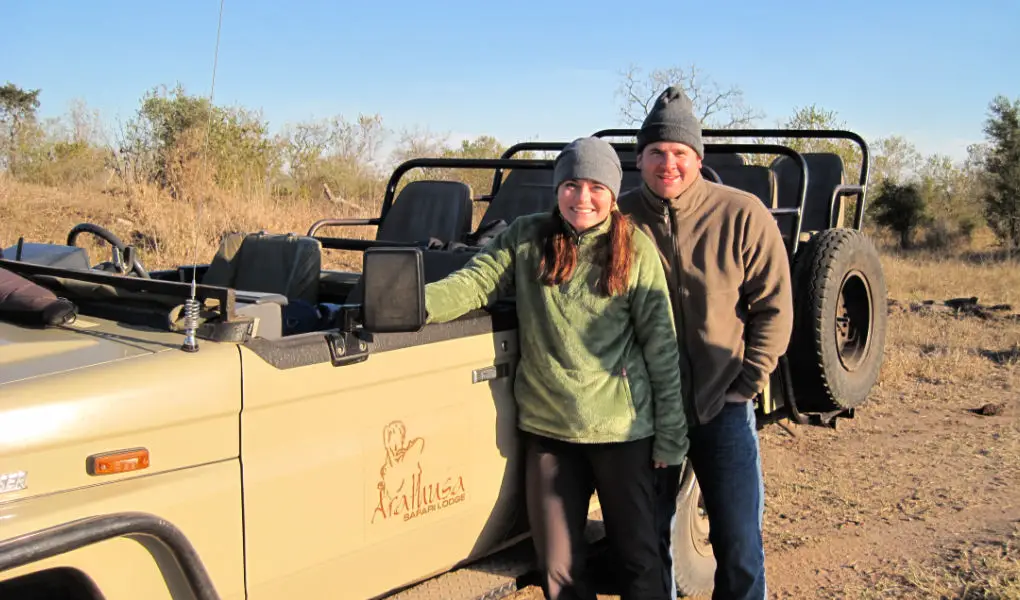
We traveled to Africa multiple times, for all trips we used Go2Africa, and to this day we’d send our own parents to them without hesitation. Africa is not a cheap place to visit, and it’s definitely not somewhere you want to “go cheap.” You get what you pay for, and there’s no clever workaround. What there is, however, is smart strategy. That’s what the rest of this guide is about.
— The Budget Savvy Travelers
💡 Budget-Savvy Tip: Use this automated quiz tool to easily build the perfect safari for your budget with Go2Africa. 👇
🔎 Find the Perfect Safari for Your Budget → Get a Free Quote Now
In This Guide
Why Best Value Safari Lodges Are Your Smartest 2026 Move
Africa’s safari market is finally correcting. After years of every lodge slapping “luxury” on the brochure and pricing accordingly, emerging parks like Kafue in Zambia and private concessions outside Kruger are now offering genuinely competitive rates, often 30–50% cheaper than headline names like the Serengeti or Okavango Delta, with wildlife density that matches them beat for beat.
The other shift worth knowing about: green season pricing. November through March used to get written off as “the wet season.”
Experienced safari travelers know it’s actually when migrant birds arrive, predators hunt in the open, and lodges quietly drop rates by up to 40%. Wildlife doesn’t hibernate in the rain. It hunts harder.
🧑🔬 The Value Safari Formula Nobody Puts in Writing
Best value = wildlife density + guide quality + rate per night.
A $500/night per person (pp) lodge in a reserve with 10 lion prides beats a $1,200/night pp camp where lions stroll through once a week. The view from your deck is nice. What’s happening beyond it is what you’re actually there for.
That’s the lens we used for every pick below. These aren’t high-value lodges because they’re cheap; they’re high-value lodges because what you get wildly outpaces what you pay.
⚠️ The Biggest Value Mistake Safari Travelers Make
Trying to save money by doing a self-guided drive instead of staying at a lodge. In national parks like Kruger and the Serengeti, you must stay on marked roads, no off-roading, no following animals into the bush, no night drives.
At a private reserve lodge, rangers communicate by radio, drive off-road directly to sightings, and take you out after dark when predators actually hunt.
We’ve done both. There is no comparison. The private reserve lodges are the way to go; more on this in the Arathusa section below.
The 5 Best Value Safari Lodges in Africa: One Per Country, Zero Filler
Five countries. Five genuinely different wildlife stories. Five lodges where what you get dramatically outpaces what you pay.
No padding, no mystery placements, just the strongest, most honest pick in each destination.
💡 Understanding Safari Pricing
Yes, some safari lodges cost $1,000+ pp, per night. But this usually represents just two or three unforgettable nights at the core of your trip, not your daily travel budget for weeks on end.
The reality is that safari pricing reflects access: remote wilderness areas, expert guides, conservation fees, limited vehicles, food, drinks, other activities, and wildlife encounters that simply can’t be recreated elsewhere.
Africa tends to reward smart investment rather than bargain hunting. When safaris become extremely cheap, it often shows with crowded vehicles, rushed sightings, long transfers, or reduced access to prime wildlife areas. Spend where it matters most, on the safari itself, and balance the rest of your journey with far more affordable beaches, vineyard escapes, city sightseeing, or overland travel.
1. Arathusa Safari Lodge
Sabi Sands · South Africa
From $700 pp sharing
“The highest leopard concentration in South Africa, Big Five in one day, value for money that Sabi Sands is not supposed to offer, and rangers who treat speed limits as a loose suggestion.”
As we approached the entrance to the lodge during our transfer from the airport, a massive leopard walked directly in front of our vehicle. That was the moment we knew this place was different. — The Budget Savvy Travelers
Leopard Capital of SA
Lion Prides
Classic Big Five Destination
Best Value in Sabi Sands
Why Arathusa Leads the List
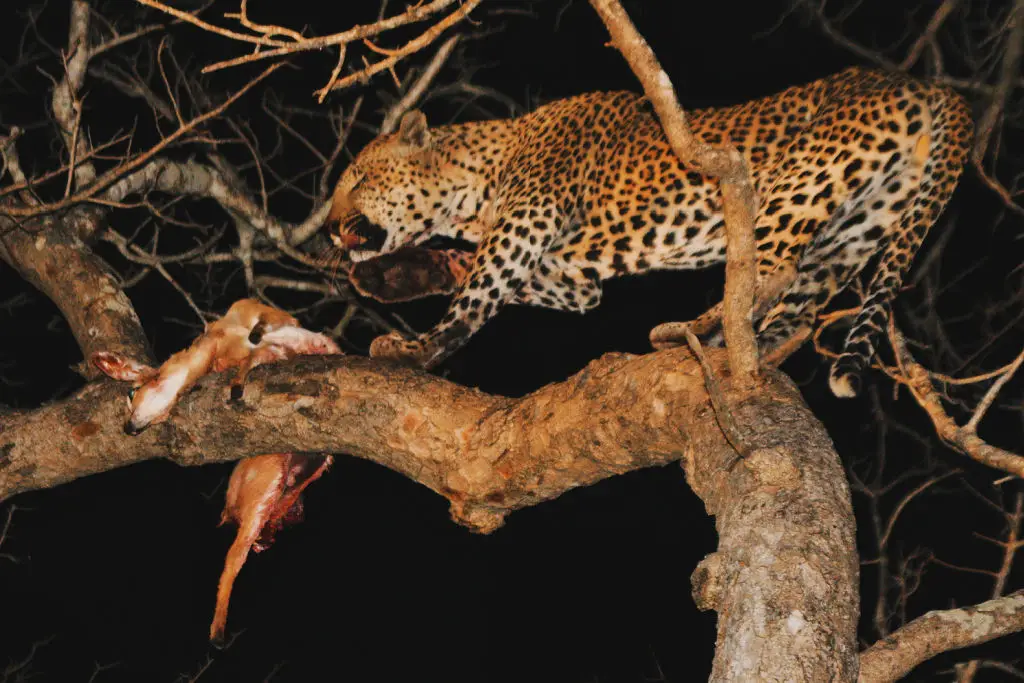
Arathusa Safari Lodge sits in the northern sector of Sabi Sands and is number one on our list because it’s our favorite. This specific region is widely regarded as having the highest leopard concentration in South Africa, and one of the highest anywhere in the world.
Around 14 leopards operate in the area Arathusa traverses, six regularly. These are habituated, territorial animals whose movements the guides track by name. Seeing a leopard here isn’t luck. It’s basically on the itinerary.
Lion prides are resident too, along with elephant, buffalo, and rhino, to round out the Big Five. The lodge’s waterhole sits directly in front of the viewing deck, buffalo herds of 300+ animals, elephant families, and hippos all passing through between drives like they own the place (because they do).
Over 90% of guests see the full Big Five, very often in a single day, sometimes on one drive. That number alone separates Arathusa from most of the competition at this price point.
Best for: Anyone who wants the iconic Sabi Sands leopard experience without the $1,200+/night pp price tags that surround it. Couples, first-timers, and wildlife photographers who know that guide quality and location matter more than décor. Also, people who’ve always wanted to drive through a lion pride at midnight. Turns out that’s most people.
🎯 Why We Call the Arathusa Rangers “Cowboys”
After Arathusa, nearly every game drive we’ve taken elsewhere has felt a little restrained by comparison.
One night drive in particular still comes up in conversation years later.
We had been following fresh lion tracks when the spotter suddenly swept his spotlight off the road. The driver turned off the headlights completely.
For nearly twenty seconds, we sat in total darkness, exposed in one of Sabi Sands’ open, roofless Land Cruisers, the entire Milky Way above us, listening to the bush with no idea what was ahead.
Then the lights came back on.
We were sitting in the middle of a slow-moving pride of seven lions.
Because Sabi Sands allows off-road tracking, the guide steered directly into the bush to follow them, pushing through scrub, over small trees that snapped against the vehicle and occasionally fell inside the open cabin. Nothing above us. Nothing between the animals and us. Lions walking feet away, completely indifferent to our presence.
We’ve driven through reserves across Africa since then. Very few allow this kind of access. That night made one thing clear: the difference between a good safari and an unforgettable one usually isn’t the animals. It’s whether your guide can leave the road, follow them into the bush, and put you in the middle of the moment, not watching it from a distance.
⚠️ Fair Warning
Arathusa sits on the low-to-mid tier of the Sabi Sands luxury spectrum: comfortable, thoughtfully designed, and genuinely relaxing. But this isn’t a six-star resort competing over pillow menus and artisanal chocolates mysteriously appearing at turndown.
There’s a spa, an infinity pool overlooking the waterhole, and some suites come with private plunge pools. The real reason you’re here, though, isn’t thread counts or scented candles.
You’re paying for access, specifically, access to some of the best leopard territory in South Africa, and guides who can legally drive off-road and follow wildlife wherever the moment leads. That’s what turns a game drive into an experience you’ll still be talking about years later.
The money goes toward sightings, guiding, and wilderness immersion, not tiny desserts balanced on your pillow at night. For travelers who care more about wildlife encounters than luxury theatrics, it’s the right trade every single time.
2. Muchenje Safari Lodge
Chobe National Park · Botswana
From ~$560 pp/night (shoulder season)
“Chobe’s elephant highway, privately owned, guide-obsessed, and criminally underwritten. The elephants here have no idea they’re supposed to be more expensive.”
💡 A Note on This Pick
We specifically recommend Muchenje Safari Lodge for travelers who want real Botswana wildlife without the Okavango Delta price tag.
Largest Elephant Herds in Africa
Chobe River Cruises
Privately Owned
First-Rate Guiding
Why Muchenje Wins the Botswana Value Game
Botswana is upfront about its pricing: it’s not cheap. The government deliberately limits visitor numbers to protect its wilderness, and lodge rates reflect that policy.
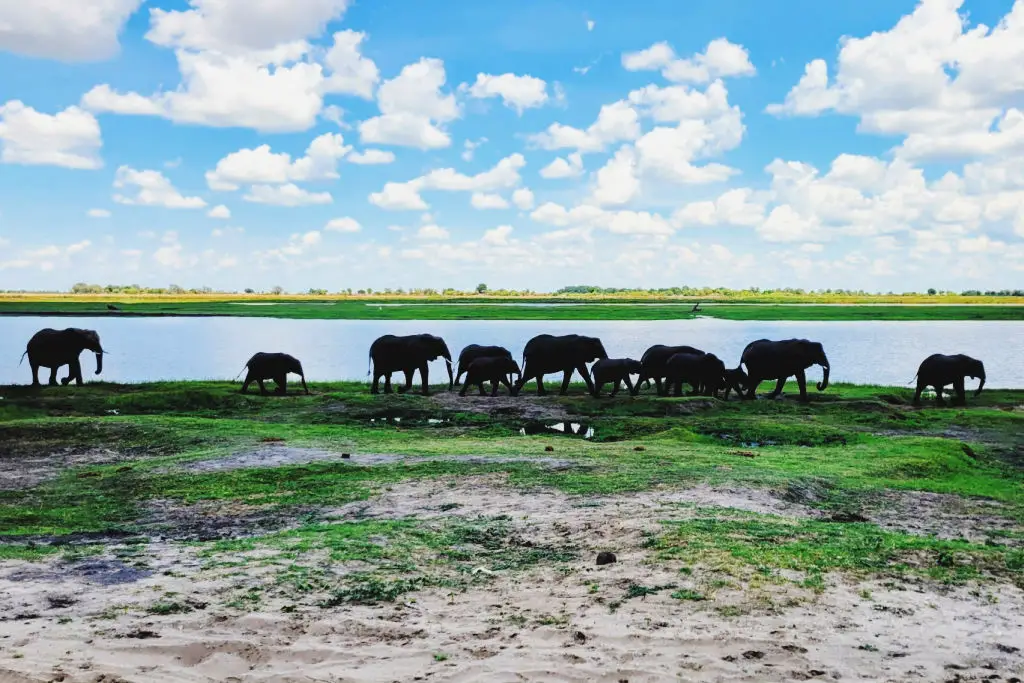
Muchenje Safari Lodge is the exception that cracks the value equation open, at least until the masses find out. Privately owned and consistently praised for guiding quality, it sits on a ridge overlooking the Chobe floodplain, one of the most productive wildlife areas on the continent, at rates well below the big-brand camps on the same riverfront.
Chobe holds what is credibly described as the largest elephant population in Africa, concentrated along the river in the dry season. A boat cruise here, included in most Muchenje packages, is a different kind of game drive entirely: elephants swimming, crocodiles basking, hippos making their opinions known.
Botswana wildlife. Not Botswana prices.
Best for: Elephant enthusiasts, and honestly, anyone who’s ever watched a nature documentary and thought, “I want to be on that boat.” Real Botswana without the $1,000+/night pp Okavango sticker shock. Travelers combining Botswana with a Victoria Falls stop; Muchenje is about 90 minutes away.
⚠️ The Honest Botswana Math
There is no truly cheap safari in Botswana, that’s by design. Shoulder season (May–June, October–November) is when value windows open, with rates dropping 30–40% from the July–September peak. Get the timing right, and Muchenje becomes one of the smartest bookings in southern Africa.
3. Serengeti Serena Safari Lodge
Central Serengeti · Tanzania
From ~$226 pp/night (low season)
“The Serengeti’s best-value permanent lodge, central location, all-year game viewing, Big Five and Migration without the tented-camp price tag.”
💡 Our Serengeti Experience: And Why Lodge Choice Matters Here
We stayed at Lemala Ewanjan Tented Camp and Lemala Explorer Kigelia in the Serengeti. The wildlife was genuinely extraordinary. We took a hot air balloon ride and watched a crocodile eating a lion from the air, which is not a sentence we expected to write.
But the whole time, we kept saying: “I wish this were more like Arathusa.” In a national park, vehicles must stay on designated roads. You watch from a distance and hope animals walk your way. In a private reserve, rangers follow the game off-road wherever it goes. That gap in experience is real, and it shapes everything about how you choose where to stay.
Big Five
Great Migration
All-Year Game Viewing
Why Location Makes All the Difference Here
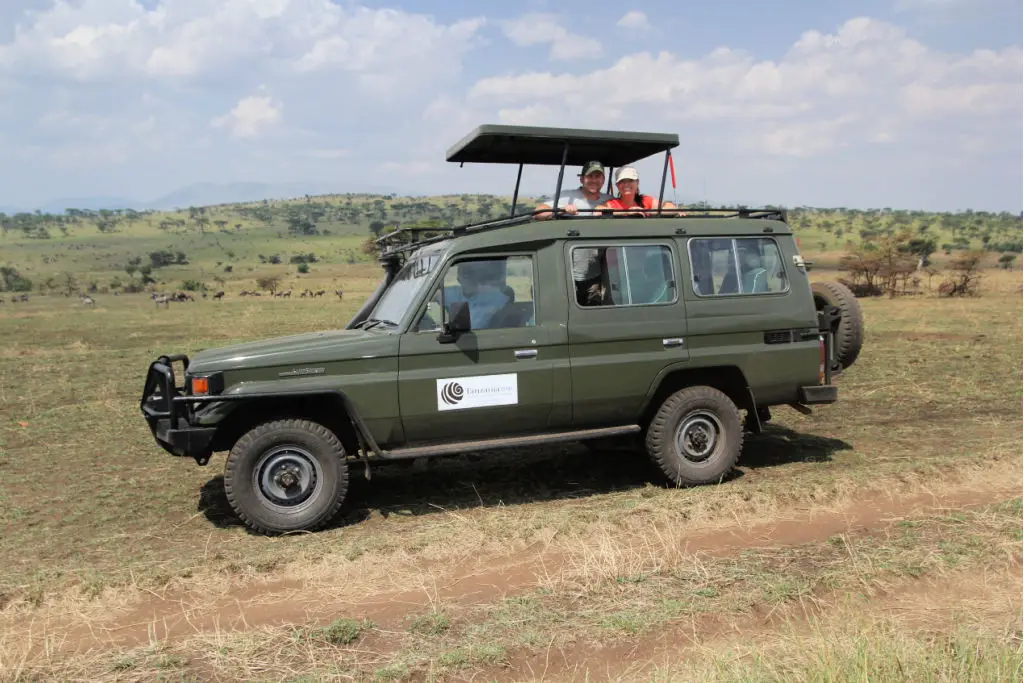
Most Serengeti lodges make you choose between affordability and a good location. Serengeti Serena Safari Lodge sidesteps that entirely.
Set on an acacia-lined ridge in the central Serengeti, it delivers genuine all-year game viewing, not dependent on the Migration calendar the way northern or southern camps tend to be. It sits adjacent to the Western Corridor and Grumeti River, one of the most productive wildlife zones in the park.
The architecture is worth a mention: 66 double-storey rondavels designed to reflect a Maasai village, an infinity pool overlooking the plains, and a dining room built to feel like a tribal king’s chamber. More character than most camps at twice the price.
At roughly $225 per person per night in low season and around $550 at peak, this is as far as your dollar stretches in the Serengeti without sacrificing the experience.
Best for: First-time Serengeti visitors who want a permanent lodge with reliable year-round wildlife. Anyone visiting outside peak Migration season who still wants strong Big Five sightings. Travelers who want the iconic Serengeti without a $700+/night pp price tag and the mild smugness that comes with finding it.
💡 Timing Your Visit
Low season (April–May) means the lowest rates and lushest scenery, with excellent predator activity and almost no other vehicles at sightings. For Great Migration river crossings, book July–October when the herds push through the Western Corridor. Serena’s location puts you closer to that action than most central camps.
4. Kafue River Lodge
Kafue National Park · Zambia
$390–$490 pp/night fully inclusive
“River views, lion and cheetah on the doorstep, walking safaris in the country that invented them, and a published rate you can actually plan around.”
🌿 We’ve Been to Zambia, Here’s What It Felt Like
We stayed at Chundukwa River Lodge in Musi-O-Tunya National Park on our second Africa trip. Zambia felt immediately different from South Africa and Tanzania: quieter, rawer, and with far fewer vehicles at any sighting.
It’s the Africa that still feels genuinely undiscovered. Kafue takes that same spirit and scales it up: a national park the size of Wales, and a lodge that puts you on the river right at its border.
Lion & Cheetah
Elephant Crossings
Walking Safaris
River Activities
Why Kafue River Lodge Is Zambia’s Best-Kept Secret
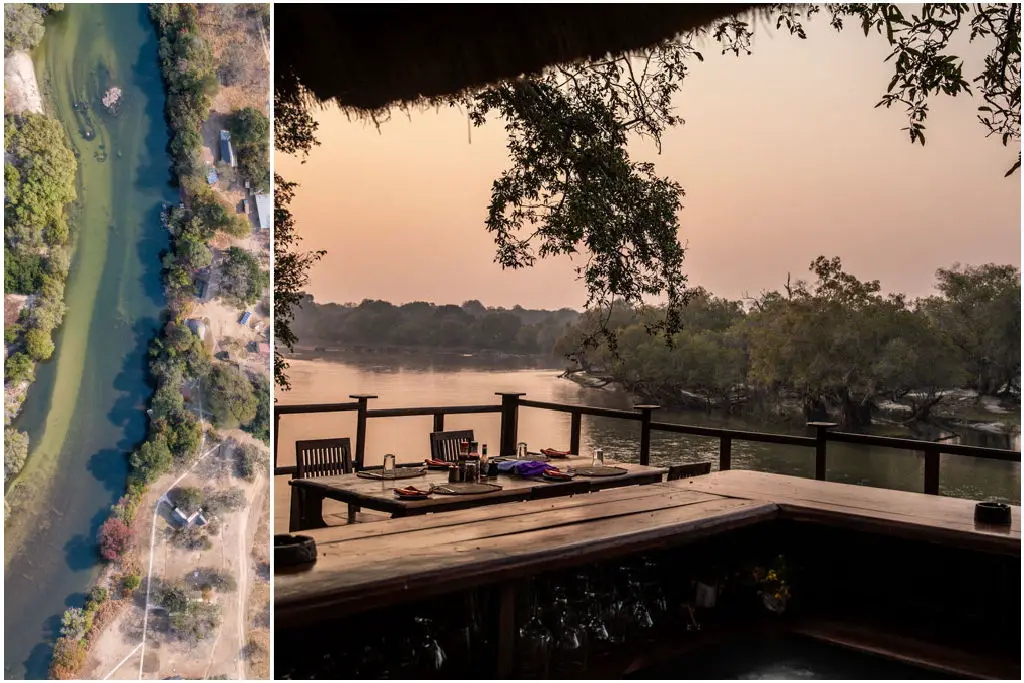
Zambia is the birthplace of the walking safari, and Kafue River Lodge is one of the best places on the continent to actually do one properly. Sitting on the border of Kafue National Park with 180-degree river views, the lodge combines land game drives with river-based activities, a combination most single-focus safari camps can’t offer.
Lions and cheetahs are regularly sighted on game drives. Elephant crossings at certain times of year are described by guides as genuinely spectacular. The Kafue River stretch here is also considered some of the finest fishing water on the entire river, useful if you want variety beyond the drives.
Each tented chalet has private decking overlooking the river, a fireplace, a freestanding bath, and an outdoor shower, run entirely on solar power. Dinner under the stars by the river. Breakfast to birdsong at the bank.
At $390 pp per night in shoulder season (fully inclusive: all meals, selected beverages, activities), this is one of the most transparent value propositions in this entire article. No rate games, no “enquire for pricing” runaround. Go2Africa publishes it directly.
Who’s Kafue Best For?
Travelers who want both land and river wildlife in one base. Anyone drawn to walking safaris done properly. Anglers who want something to do between game drives. People who’ve done Kruger or the Serengeti and want Zambia’s quieter, rawer version of the same experience, without having to explain to anyone why they’re skipping the famous one.
⚠️ Worth Knowing
Kafue River Lodge is seasonal: open 1 March through 31 December only. It closes in January and February during the peak wet season. Plan accordingly, and book early for the June–November dry season window when game viewing peaks and rates move to the $490 tier.
🌊 Pair It With Victoria Falls, Easily
Kafue River Lodge combines well with a 2–3-night Victoria Falls stop; no additional international flight needed. Two solid high-value options right at the Falls are worth knowing about:
- Ilala Lodge ($329/pp B&B): walking distance to the Falls, national park on the doorstep, warthogs on the lawn. The most convenient base in town for the Falls experience itself.
- Victoria Falls Safari Lodge ($330/pp B&B): 4km from the Falls, perched on an escarpment above Zambezi National Park with its own busy waterhole visited daily by elephant and buffalo. More wildlife, slightly less convenience.
Note: Both are B&B rates only: activities, game drives, and meals beyond breakfast are additional. Factor that into your total budget.
Ilala Lodge → Learn More
Victoria Falls Safari Lodge → Learn More
5. Onguma Bush Camp
Onguma Private Reserve · Etosha, Namibia
From $170 pp/night
“Four of the Big Five, black rhino conservation, cheetah on open savanna, 300+ bird species, night drives, on a private reserve bordering Etosha for $170 pp/night.”
💡 Why Namibia Made This List
Onguma Bush Camp is here because we consistently point value-focused travelers toward Etosha as the most accessible Big Five destination on the continent, and Onguma Bush Camp is the standout value pick at that rate. We’re always upfront when a pick is operator-vetted rather than personally visited. Namibia is already on the list for trip three.
4 of the Big Five
Black Rhino Conservation
Cheetah
Night Drives
Why $170 a Night Buys More Than You’d Expect
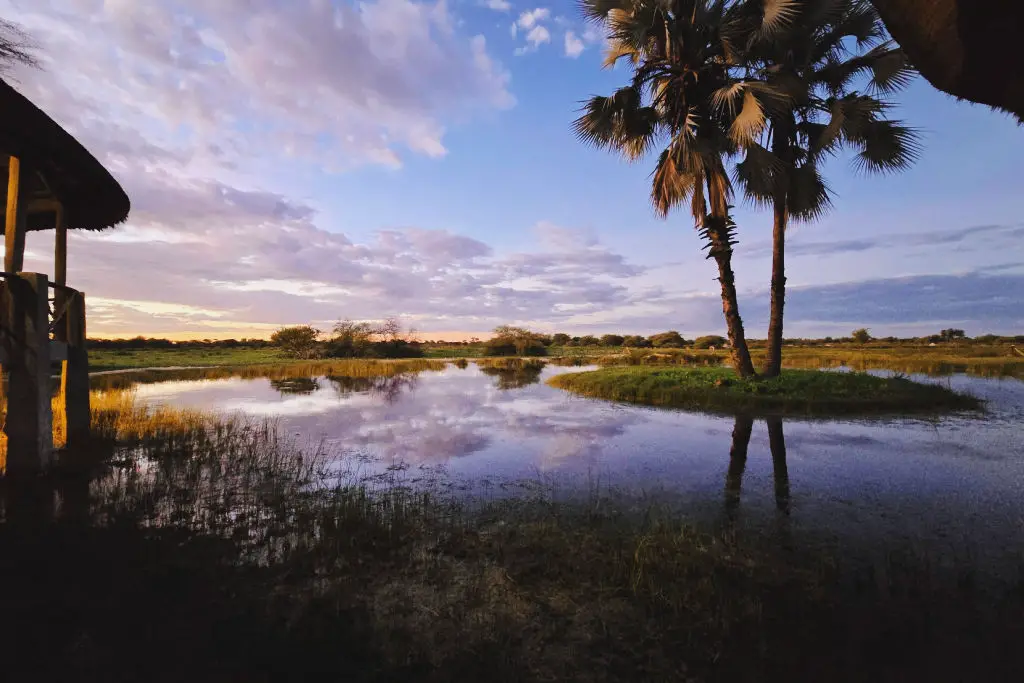
Onguma Bush Camp sits within Onguma Game Reserve on the eastern border of Etosha National Park, sharing a fence with the park. The reserve is home to four of the Big Five: elephant, lion, leopard, and rhino, with buffalo the only absentee.
Buffalo can still be seen on guided drives into Etosha itself, which Onguma guests access daily. The black rhino story here is a genuine highlight: Onguma runs an active rhino conservation and monitoring programme, and the reserve’s waterhole is a known rhino gathering point after dark.
Cheetahs are a major draw, too. Onguma’s open savanna gives excellent daytime visibility, and hunting behavior is regularly observed.
The reserve also hosts over 300 bird species, making it a quiet favorite among birders alongside its predator credentials. And crucially, guided night drives are available here, which Etosha National Park itself does not allow.
Spotting black rhino by spotlight on a private reserve is one of Africa’s genuinely rare budget wildlife experiences. At $170 per person per night, Onguma Bush Camp does not feel like a $170 camp. That’s entirely the point.
Who’s Onguma Bush Camp Best For?
Travelers who want a proper guided private reserve experience in Namibia without the $800+ pp/night price tags. Black rhino seekers, night drives here are one of Africa’s great budget wildlife experiences. Birders. Anyone who wants night drives and off-road access, you simply cannot get inside Etosha National Park itself. And anyone who has ever thought, “$170 a night in Africa sounds too good to be true,” it’s not, and we wanted you to know that.
🌿 The Namibia Self-Drive Option Still Stands
If you’d rather drive yourself, Namibia remains the best self-drive safari country in Africa. Rent a 4×4 in Windhoek, enter Etosha at the Anderson Gate, and set your own pace through the park.
Government rest camps like Okaukuejo, famous for its own floodlit waterhole, are available directly through Namibia Wildlife Resorts. Total self-drive costs, including vehicle, fuel, accommodation, and food, can come in under $150/day per couple.
Onguma Bush Camp and the self-drive option complement each other well: start with guided nights at Onguma, then drive the park yourself by day.
⚠️ Book Early
Onguma Bush Camp is small and fills up fast, particularly for the June–October dry season peak when game viewing is at its best. This is not a last-minute booking.
Quick Comparison: All 5 Lodges at a Glance
Five countries, five value stories, here’s how they stack up on the decisions that actually matter:
💡 How to Read These Rates
All rates are per person sharing (two people in one room/tent) and generally include accommodation, meals, and two game drives per day. Solo travelers typically pay a single supplement of 30–50%; always confirm before booking. Rates vary by season; verify directly with the lodge or operator.
Best Value Safari Destinations by Region: What to Expect & What to Pay
Picking the right country is half the budgeting battle. Here’s the honest geography of value:
✓ South Africa: The Best First Safari, and the Best Leopard Sightings on Earth
Sabi Sands’ reputation comes down to one animal: the leopard. The reserve’s unfenced border with Kruger, combined with decades of habituation work, means the northern sector where Arathusa sits has the highest leopard concentration in South Africa, and one of the highest anywhere in the world.
Add resident lion prides, elephant, buffalo, and rhino, and you have the full Big Five in one reserve. South Africa also offers no malaria in many reserves, direct international flights, solid road infrastructure, and price points from $50/night Kruger rest camps to $2,000+/night ultra-luxury. Arathusa is where the value equation lands exactly right.
⚠️ Safari Timing Tip
Southern Africa’s dry season (May–September) is when game viewing peaks, vegetation thins, animals congregate around water, and visibility opens up. Book 6–12+ months ahead for peak July–August at top lodges. The good ones fill up, and the prices reflect it.
✓ Botswana: Expensive Reputation, Smarter Than You Think
Botswana’s high-cost, low-volume tourism model is government policy, not lodge greed. Visitor numbers are deliberately limited to protect the wilderness.
Chobe National Park, bordering Namibia and Zimbabwe near Victoria Falls, is where the value play exists. Unlike the remote Okavango Delta (expensive light aircraft access required), Chobe is road-accessible.
Muchenje delivers Botswana’s legendary wildlife at rates well below those of the delta camps. Shoulder season (May–June, October–November) drops rates 30–40%. Pair it with Victoria Falls, and you have a seriously efficient southern Africa itinerary.
✓ Tanzania: Serengeti Value If You Know Where to Look
The Serengeti’s name prices most camps at $500–$1,500+ pp/night in peak season. The smart move is a central permanent lodge with all-year game access, rather than a remote tented camp tied to one migration window.
Serengeti Serena’s central position, adjacent to the Western Corridor, gives you Big Five year-round and Migration access from July to October, at $150–$300 pp/night depending on season.
✓ Zambia: The Underrated Value Zone
Zambia is where safari travelers who’ve checked off Kruger and the Serengeti tend to go next, and the prices genuinely haven’t caught up with the quality. Kafue and South Luangwa run 30–40% cheaper than equivalent Tanzania experiences.
Kafue River Lodge gives you a fully inclusive base on the river with lion, cheetah, walking safaris, and boat activities, all at a published Go2Africa rate with no runaround. Victoria Falls sits on the Zambia–Zimbabwe border, too, so you can add one of the world’s great spectacles without a separate international flight.
✓ Namibia: The Self-Drive Safari Bargain of Africa
Great roads. Logical self-drive infrastructure. Etosha National Park is waiting at the end of the drive.
Namibia is the most cost-effective safari country on the continent, and Onguma Bush Camp at $170/pp gives you a fully guided private reserve experience, including night drives and black rhino conservation access, at a price that makes every other guided safari destination look expensive.
For self-drivers, government rest camps inside Etosha are available directly through Namibia Wildlife Resorts. Either way, Namibia delivers.
Budget Hacks for Your Best Value Safari Lodge Adventure
The lodge rate is only one part of the equation. Here’s where the money actually gets saved:
Book Shoulder Season, Not Low Season
True low season means empty parks and lower rates for a reason: the wildlife disperses. Shoulder season (October–November in Southern Africa; April–June in East Africa) gives you lower rates AND solid game viewing. The sweet spot most people miss.
Use an Operator for Multi-Country Trips
Companies like Go2Africa handle logistics, vet lodges, and often have rate access that isn’t publicly listed. But the real reason we keep recommending them is simpler: they’re your boots on the ground when things go sideways.
When we arrived at our first Serengeti lodge, there was a controlled burn nearby. Go2Africa moved us to a larger tent at a higher-rated camp, same price, no argument. That only happens when your operator has real relationships with the properties. A DIY booking gets you a customer service email. Go2Africa gets you a solution.
Choose Emerging Parks Over Famous Ones
Kafue vs. Serengeti. Hwange vs. Masai Mara. Comparable wildlife, 30–50% lower rates, zero vehicle congestion at sightings. The lions don’t know they’re in the less-famous park.
Green Season Is Budget Season
November–March in southern Africa cuts rates up to 40%. Baby animals everywhere, lush scenery, migrant birds arriving. Pack a light rain jacket, as it rarely rains for more than an hour at a stretch.
Self-Drive Namibia
Already covered above, but worth repeating: the Etosha, Sossusvlei, Fish River Canyon circuit is one of the world’s great road trips and genuinely affordable.
Check What’s Included Before You Book
Most lodge rates cover meals, drives, and park fees. Laundry, premium drinks, and spa treatments are extras. A quick inclusions check prevents the checkout surprise.
🎯 Operator vs. DIY: The Simple Rule
More than two parks or two countries? Use an operator. The coordination complexity of cross-border transfers, internal flights, and lodge sequencing is genuinely hard to optimize solo, and the time you spend on it usually costs more than the savings. One destination? Go direct if you prefer, but the cost is usually equal to or more than booking with Go2Africa.
🌍 Take Go2Africa’s Safari Quiz → Get a Free Quote
FAQ: Your Best Value Safari Budget Questions, Answered
Q: What’s the cheapest way to do a proper safari in Africa?
Namibia self-drive or Kruger government rest camps. A self-drive through Etosha in a rented 4×4 can come in under $150/day per couple all-in. Kruger’s rest camps start at $50/night. Neither sacrifices wildlife quality; both deliver Big Five sightings regularly. Just don’t expect off-road drives or night drives inside the national parks.
Q: Are “best value” safari lodges safe?
Yes. Safari lodges at any price point are built around visitor safety: armed rangers, controlled access, and experienced guides are standard, whether you’re paying $100 or $2,000+ a night. The risks safari travelers actually deal with are practical: malaria precautions, sensible behavior in cities before and after the safari, and third-party travel insurance for cancellations. See our full safari safety guide for the longer version.
Q: What’s the best season for value safari pricing?
Shoulder seasons are where value actually lives. In Southern Africa, October–November and March–April offer reduced rates with genuine wildlife quality. In East Africa, April–June brings the Serengeti down 20–40% from peak. True low season means empty parks and lower rates for a reason. The middle ground is the sweet spot.
Q: Is malaria a concern at value safari lodges?
Malaria risk in most safari destinations is highest during the wet season (November–April) when mosquitoes are most active. We’ve always traveled in the dry season and never even saw a single mosquito. That said, we still stayed vigilant; it’s worth seeing a trusted doctor before any trip to a malaria zone. Lodges supply nets and repellent regardless. It’s manageable. It shouldn’t stop you.
Q: How far in advance should I book a value safari lodge?
6–12 months for peak season (June–October, southern Africa; July–October, East Africa). Value lodges fill faster than luxury ones, more demand, fewer rooms. Shoulder season, you can sometimes get away with 6–12 weeks, but popular spots like Kafue and Muchenje still book ahead. Book early, adjust later; most lodges have reasonable cancellation policies.
Q: Can I combine a value safari lodge with a beach stay?
Highly recommended. Zanzibar pairs seamlessly with a Tanzania safari, with no extra international flight. Mozambique’s southern coast pairs with South Africa. A 3-night safari plus 4-night beach split also makes the overall cost more manageable: beach days are substantially cheaper than safari nights, and the contrast between the two is genuinely one of travel’s great combinations.
Lodge Smart, Safari Harder
There you have it: Five countries. Five completely different wildlife stories.
- Arathusa’s leopard and lion territory is in the world’s highest-density leopard reserve.
- Muchenje’s elephant herds thunder along the Chobe.
- Serengeti Serena’s all-year Big Five plains.
- Kafue River Lodge’s river-and-land safaris in one of Africa’s most underrated parks.
- Onguma Bush Camp’s black rhino conservation and night drives cost $170 pp a night.
These are the best value safari lodges in Africa for 2026. One per country. Zero filler.
The animals don’t check the lodge price list. Neither should you.
You’ll Still Be Talking About It Years Later
The moment that still stays with us: watching a leopard chase and kill a steenbok, drag the carcass up a tree, and then driving directly under that tree as blood dripped onto our vehicle. Or lying back in the open Land Cruiser at night, spotlight off, engine quiet, looking up at the entire Milky Way just before a shooting star crossed it.
No price tag prepares you for that. No overland bus gets you there. Africa rewards the traveler who does it right.
Reserve the dates in your head. Book early. Go. Kafue won’t be this undiscovered forever, and neither will you.
🦁 Ready to Stop Planning and Start Booking?
If you’re still working out which destination fits your style and budget, Go2Africa’s quiz tool matches you to the right itinerary in minutes, no obligation, no hard sell. We’ve used them on multiple safaris, and they’re worth the conversation.
Disclosure: Some links in this article are affiliate links. If you book through them, we may earn a small commission at no extra cost to you. We only recommend lodges and operators we’ve either used personally or vetted through independent research. Rates shown are indicative and subject to change; always verify with the lodge or operator before booking.
We Need Your Help
Did you find this article helpful? Bookmark it and click the links below when planning your next vacation. You’ll get the best price, we’ll earn a small commission, and you’ll help support future articles.